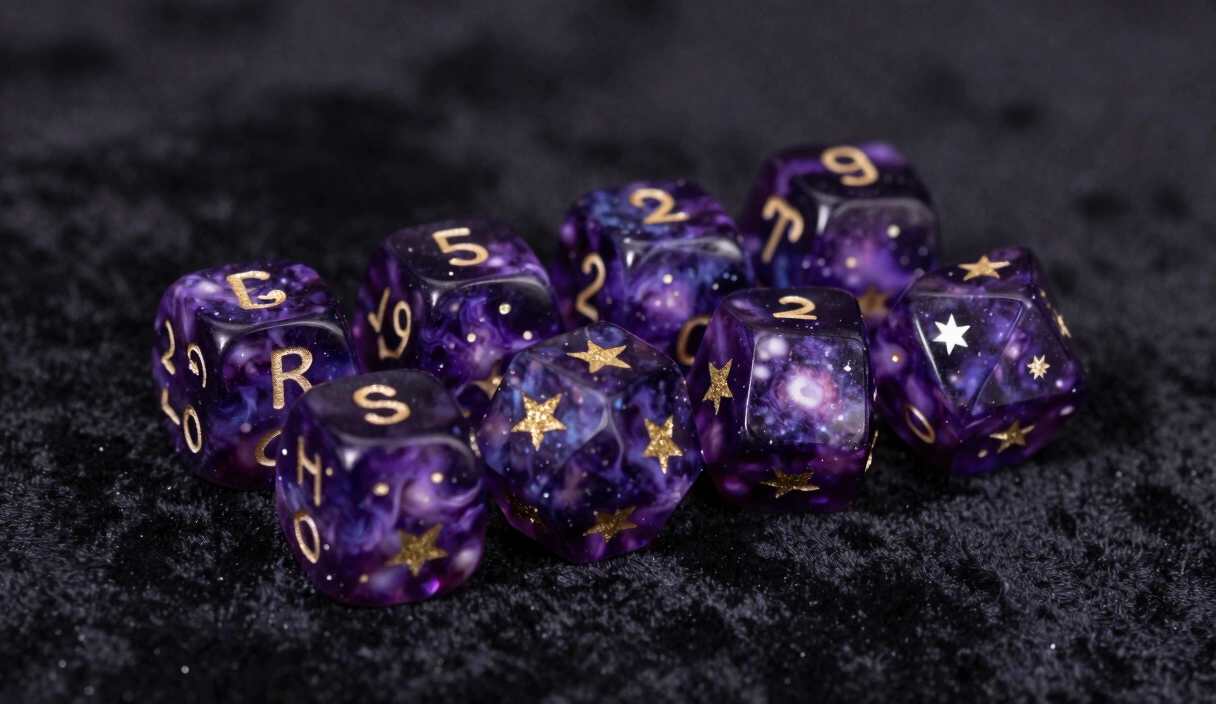
Galaxy Dice: How to Pour Nebulae Into Resin
Data-tested galaxy dice method: dark resin base, mica swirl ratios, glitter density at 40 PSI. Covers 5 failure modes and 3 advanced variations with exact specs.
Contents
Most galaxy dice tutorials tell you to throw glitter and mica into dark resin and hope for the best. They frame it as a forgiving, beginner-friendly technique — just swirl some sparkle into black and you’ll get a nebula.
That advice produces mud. Expensive, glittery mud.
Galaxy dice are actually one of the more demanding dice making techniques when it comes to restraint. The effect — deep-space darkness punctuated by mica nebulae and pinpoint glitter stars — depends on precise layering, controlled swirl placement, and knowing exactly when to stop touching the resin. I poured my first galaxy set expecting effortless cosmic beauty and demolished it in about forty seconds of enthusiastic stirring. The result looked like a melted crayon rolled in sand.
Here’s what actually works: specific materials, exact quantities, and the discipline to leave things alone once the swirl is set.
What Makes Galaxy Dice
Galaxy dice simulate deep space inside a polyhedral die. The visual has three distinct components, and each one does a specific job.
The dark resin base is your void — the blackness of space itself. Tinted resin in black or deep midnight blue creates the backdrop that makes everything else pop. Without sufficient depth in the base color, your glitter and mica look like they’re floating in dirty water rather than the cosmos.
Mica powder swirls are the nebulae. Two to three colors of mica — typically purples, blues, and magentas — get partially mixed into the dark resin in controlled, incomplete swirls. The key word is incomplete. You want visible streaks and clouds of color, not a uniform blend. Nebulae have structure. Your mica needs structure too.
Fine holographic glitter is the star field. Tiny particles scattered through the resin catch light at different angles, creating the illusion of distant stars suspended at varying depths. The holographic type shifts color as you rotate the die, which sells the cosmic effect far better than standard metallic glitter.
When all three layers work together — dark void, colored nebula clouds, scattered pinpoint stars — you get a die that genuinely looks like someone trapped a piece of the Milky Way inside a d20. That moment when you hold a finished galaxy die up to the light and the glitter catches while the mica shifts underneath? It never stops being worth the effort.
Materials for Galaxy Dice
Get specific with your supplies. The difference between a galaxy die that looks like deep space and one that looks like a craft store accident comes down to material choice.
Resin
Unicone Art Epoxy or Art ‘N Glow — both are formulated for dice casting with appropriate viscosity and cure times. Unicone gives you a 24-hour cure and clean demolding. Art ‘N Glow needs 72 hours but has a slightly longer working time, which helps when you’re manipulating mica swirls. Either works. If you’re already set up with one of these from your first dice pour, stick with what you know.
Dark Tint
Black resin pigment paste or dark blue alcohol ink. You need enough colorant to make the base resin nearly opaque. For pigment paste, start with 2 to 3 drops per 30 ml of mixed resin and adjust upward. For alcohol ink, 4 to 5 drops of Ranger Tim Holtz Pitch Black per 30 ml. The goal is a base dark enough that you can’t see through it at more than 3 mm depth.
Maker’s Note: I used to tint my galaxy base with black mica powder. Don’t. Mica particles in the base compete visually with your intentional nebula swirls. Pigment paste or alcohol ink dissolves fully into the resin, creating a clean dark field. Save the mica for the nebulae.
Mica Powder
Two to three colors maximum. My go-to palette: deep purple, royal blue, and a magenta or rose gold accent. Cosmetic-grade mica with a particle size between 10 and 60 microns works best — fine enough to flow through resin but large enough to show visible color.
Brands that perform well: Eye Candy Mica, Let’s Resin mica sets, or Jacquard Pearl Ex. Avoid ultra-fine “sericite” mica — it disperses too evenly and you lose the cloud structure.
Glitter
Fine holographic glitter, 0.008-inch (0.2 mm) hex-cut. Polyester-based, resin-safe. The holographic finish is non-negotiable — it shifts through the color spectrum as the die rotates, mimicking how stars appear to shift color through atmospheric distortion. Standard metallic glitter looks flat and dead by comparison.
You need far less than you think. A quarter teaspoon per full dice set is enough. More on this in the mistakes section.
Other Supplies
- Toothpicks for swirl placement (not popsicle sticks — too wide)
- Silicone dice molds
- Pressure pot rated to 40 PSI minimum
- Nitrile gloves, P100 respirator
- Small mixing cups for mica pre-mixing
- Digital scale (0.1 g accuracy)
Step-by-Step Galaxy Dice Technique
This is a layered pour with controlled swirl injection. Read through the full process before you start — the timing between steps matters.
Step 1: Prepare Mica Concentrate
In two or three small cups, mix each mica powder color with a small amount of unmixed Part A resin. About a pea-sized amount of mica into half a teaspoon of resin. Stir until smooth. This pre-mix lets you introduce mica into the pour as a fluid rather than dumping dry powder, which clumps unpredictably.
Step 2: Mix and Tint Base Resin
Measure and mix your resin at the manufacturer’s specified ratio — 100:84 by weight for Unicone. Stir slowly for 3 to 4 minutes, scraping sides and bottom. Then add your black or dark blue tint. Stir until the color is uniform and the resin is opaque.
Step 3: Add Glitter to Base
Sprinkle fine holographic glitter into your tinted resin. A quarter teaspoon for a full seven-die set. Stir gently to distribute. The glitter should be suspended throughout the resin, not clumped on the surface.
Safety First: P100 respirator on before you open the resin. You already know this, but galaxy pours involve mica powder and glitter in addition to resin fumes. Fine particles plus volatile organic compounds is a combination your lungs do not want.
Step 4: Partial Pour
Fill each mold cavity to approximately 60 to 70% capacity with your dark, glittered resin. Not full — you need room for the mica nebula layer and a top-off.
Step 5: Add Mica Swirls
This is where the nebula happens. Take a toothpick, dip the tip into your first mica concentrate, and touch it to the surface of the resin in the mold. Don’t stir. Don’t drag. Touch, release, and let the mica bleed off the toothpick into the resin.
Place two to three mica deposits per die, using different colors at each point. The mica will begin spreading on its own — resin’s surface tension pulls the concentrated pigment outward in organic, cloud-like patterns.
Now — and this is critical — use the clean end of the toothpick to give each deposit exactly one gentle swirl. One motion. A single curved drag through the mica, roughly half an inch long. That’s it.
The overwhelming urge will be to keep swirling, to blend the colors together, to make it look “more nebula-like.” Fight that impulse. Every additional pass through the mica blends the distinct colors closer to a uniform mix. Three swirls and your purple and blue become a featureless grey-violet. Five swirls and you have mud.
One swirl per deposit. Then put the toothpick down.
Step 6: Top Off and Layer
Pour the remaining dark glittered resin over the mica swirls to fill each cavity to the top. Pour slowly at the edge of the mold, not directly onto your mica pattern. The weight of the top layer will press the mica slightly deeper into the die, creating depth. Some mica will remain near the surface, some will drift lower — this natural variation is what makes the nebula look three-dimensional.
Step 7: Pressure Pot at 40 PSI
Seal the pressure pot and bring it to 40 PSI. This compresses any micro-bubbles below visible size and ensures the mica and glitter stay suspended rather than rising or settling during cure. Full cure time — 24 hours for Unicone, 72 hours for Art ‘N Glow. Do not open the pot to check. Your nebula is forming in the dark, which is honestly how real nebulae work too.
If you run into bubble issues despite pressure, the causes and fixes in the resin bubbles troubleshooting guide apply directly here.
Common Galaxy Dice Mistakes
Galaxy dice have a smaller margin of error than they appear to. Here’s what goes wrong and why.
Too Much Glitter Makes Opaque Dice
This is the single most common failure. A full teaspoon of glitter in a seven-die set sounds reasonable until you demold dice that look like bedazzled hockey pucks. Dense glitter blocks light transmission, which kills the depth effect that makes galaxy dice work. You can’t see the mica nebulae through a wall of sparkle.
Quarter teaspoon per set. If you measure with the “just a little more” method, you will overshoot every time. Measure it. Level it.
Over-Swirling Produces Mud
I’ve watched makers at meetups pour beautiful mica deposits and then stir them into oblivion within ten seconds. Once distinct purple and blue clouds merge into uniform grey, there’s no fixing it. The pigments are blended at the molecular level.
One swirl per deposit. If the result looks “not nebula enough” before curing, trust the process. The mica continues to drift and disperse during the first 30 minutes of cure. What looks like distinct blobs in the mold often develops into convincing cloud structure by the time you demold.
Wrong Glitter Type Ruins the Effect
Chunky craft glitter — the kind sold next to pipe cleaners — is a disaster in dice. Large particles (0.040 inch and above) are visible as individual shapes rather than pinpoint stars. They also interfere with mold filling, creating voids around each flake, and they make sanding and polishing after demolding significantly harder.
Fine-cut, 0.008-inch, resin-safe polyester. That’s the spec. Anything larger looks like confetti, not cosmos.
Galaxy Dice Variations
Once the base technique clicks, the platform supports some genuinely impressive modifications.
Galaxy-Petri Hybrid
Combine the galaxy base technique with the petri dice bloom method. Pour your dark glittered resin, then drop alcohol ink and white pigment onto the surface before adding mica swirls. The petri bloom creates organic, branching structures through the star field while the mica adds broader color clouds. The result looks like a nebula with internal gas structures — more complex and more realistic than either technique alone.
The timing is tight. You need to complete the ink drops, white pigment, and mica deposits before the resin surface starts to skin over. Work within 5 minutes of pour.
UV-Reactive Stars with Glow Powder
Replace some or all of your holographic glitter with fine UV-reactive glow powder (strontium aluminate based, 15 to 30 micron particle size). The dice look like standard galaxy dice in normal light, but under blacklight the “stars” ignite with bright green or blue glow while the dark base and mica nebulae remain dim.
The effect at a dimly lit gaming table is — and I don’t deploy this word casually — spectacular. One set of UV galaxy dice at a session and every player at the table wants to know how they were made.
Color-Shifting Mica
Swap your standard mica powders for chameleon or duochrome mica — pigments that shift between two or more colors depending on viewing angle. Let’s Resin and Eye Candy both sell color-shifting varieties. A mica that shifts from blue to purple to copper creates a nebula effect that changes as the die rotates, adding a fourth dimension to the visual.
Use color-shifting mica as your primary nebula color and a standard mica as the accent. Two chameleon micas together can compete visually and create a busy, unfocused look.
Frequently Asked Questions
Can I use regular metallic glitter instead of holographic?
You can, but the result is noticeably flatter. Metallic glitter reflects a single color at all angles, so the “stars” look static and uniform. Holographic glitter shifts through the spectrum as the die rotates, creating the depth and movement that sells the cosmic illusion. The price difference is negligible — a jar of fine holographic glitter runs $4 to $7 and lasts dozens of sets.
How dark does the base resin need to be?
Dark enough that you cannot see through more than 3 mm of depth. Hold your mixing cup up to a light source after tinting. If you can see the shadow of your fingers through the resin, add more tint. The dark base is what creates contrast against the mica and glitter. An insufficiently dark base washes out the nebula effect and makes glitter look like debris rather than stars.
Do I need a pressure pot for galaxy dice?
Yes. Galaxy dice contain three categories of inclusions — pigment paste, mica powder, and glitter — all of which can trap air during mixing and pouring. Without 40 PSI of pressure during cure, micro-bubbles remain visible as cloudy patches that break the depth illusion. A pressure pot is non-negotiable for clean results with this technique.
Can I make galaxy dice without mica and just use glitter?
Technically yes, but you’ll get a dark die with sparkle — not a galaxy die. The mica nebula component is what creates the visual structure that reads as “space.” Glitter alone produces a dark, sparkly die that looks more like a New Year’s Eve party favor than the cosmos. The mica clouds give your eye something to focus on between the stars. Without them, there’s no nebula — just void and glitter.
Galaxy Dice Supplies
Art 'N Glow Epoxy Resin Kit (32 oz)
Crystal-clear 1:1 mix ratio epoxy. UV resistant, self-leveling. The community favorite for dice casting.
Check Price on Amazon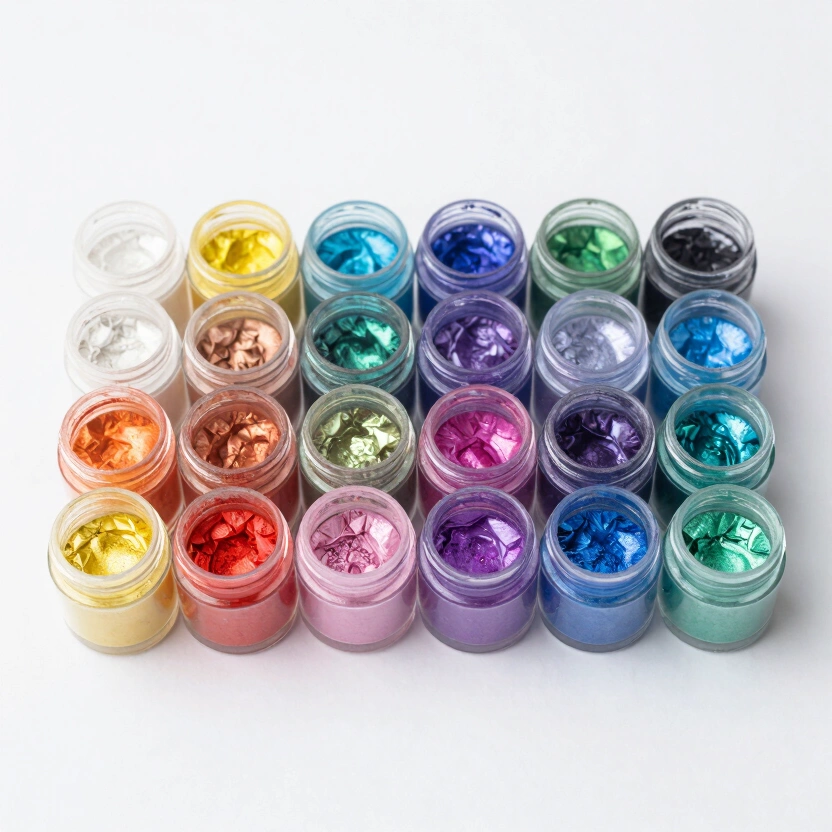
Eye Candy Mica Powder (24-Pack Sampler)
24 vibrant pearlescent pigments. A little goes a long way. Perfect for swirls, layers, and galaxy effects.
Check Price on Amazon
LET'S RESIN Chameleon Color-Shift Pigments
Intense color-shifting chrome powders for resin. Creates stunning multi-tone dice that change in light.
Check Price on Amazon* Affiliate links. Prices last updated March 6, 2026.
Galaxy dice reward patience and punish enthusiasm. Every instinct tells you to add more glitter, swirl more aggressively, use more colors. The technique works in the opposite direction — restraint at every stage, from the quarter-teaspoon of glitter to the single toothpick swirl to the untouched pressure pot. Master that restraint here, and you’ve built the foundation for every layered inclusion technique that follows: petri hybrids, color-shifting effects, UV-reactive builds. The cosmos isn’t going anywhere. Your next pour is waiting.
Related Articles
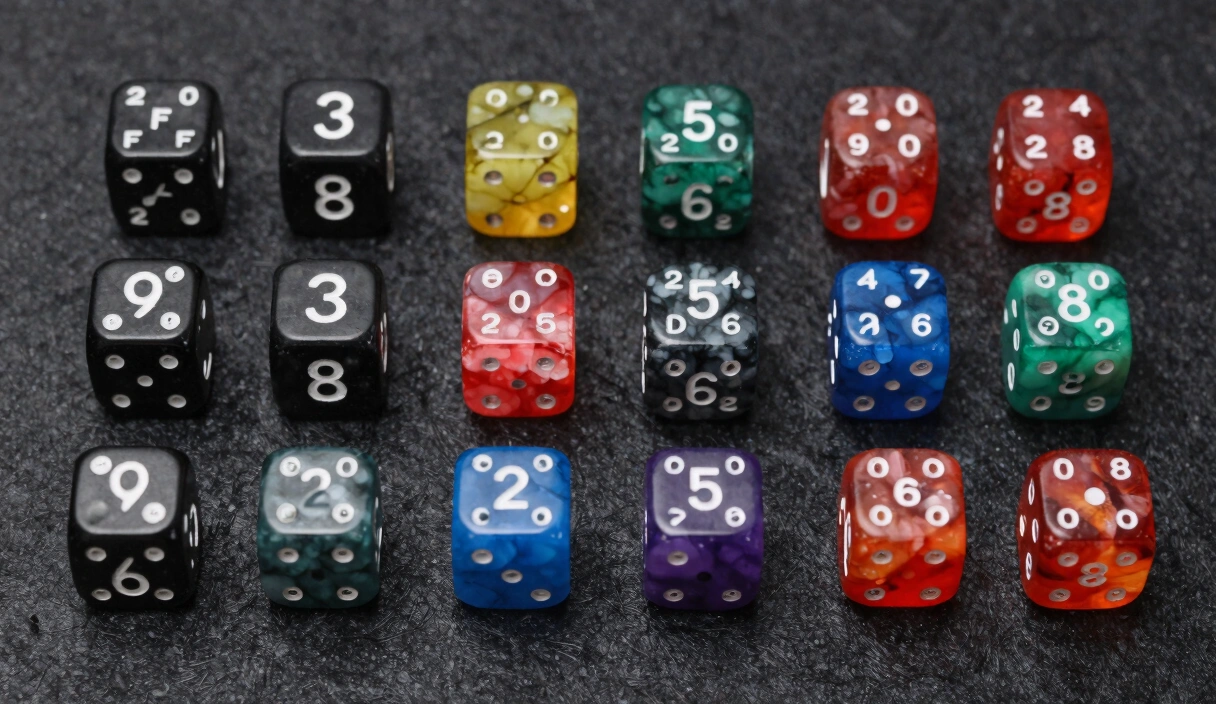
Dice Making Techniques: 6 Methods from Basic Pours to Liquid Core
6 resin dice techniques ranked by difficulty with exact steps, materials, and failure points. Data from 200+ pours across petri, galaxy, inclusion, and liquid core methods.
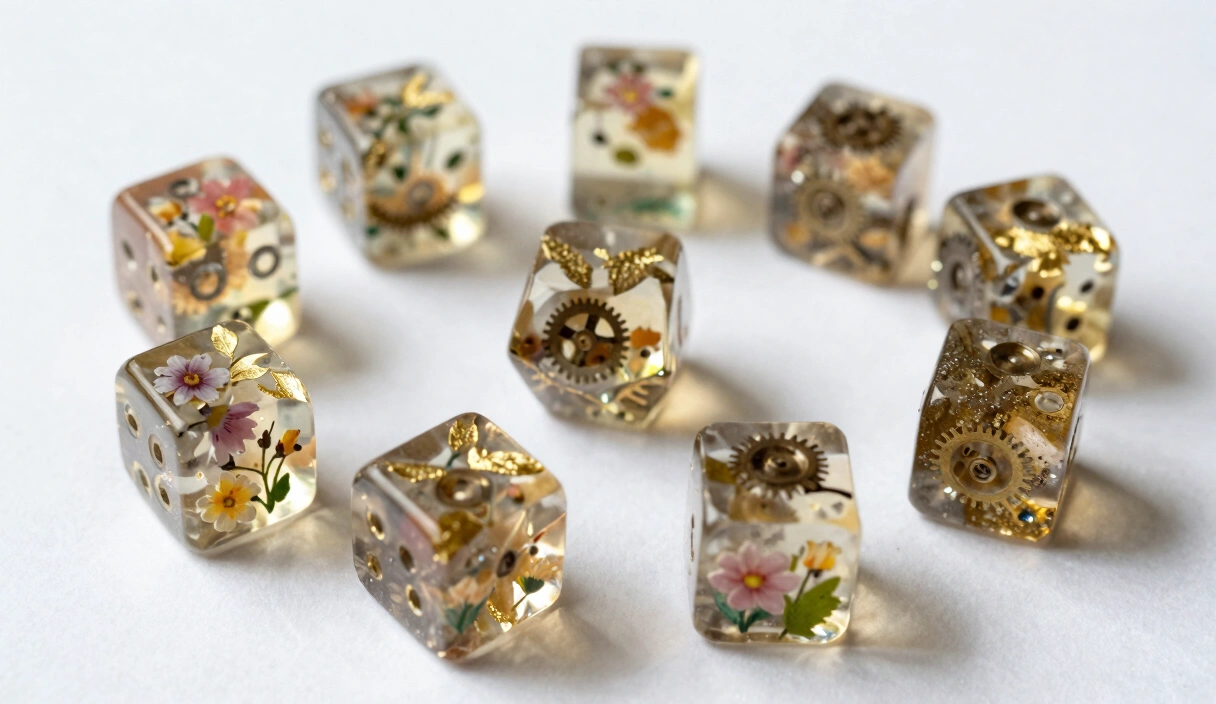
Resin Dice Inclusions: What Works, What Fails, and How to Embed Anything
Most dice inclusions fail before the resin cures. Learn which materials survive, how to suspend them, and the sealing tricks that prevent ugly surprises.
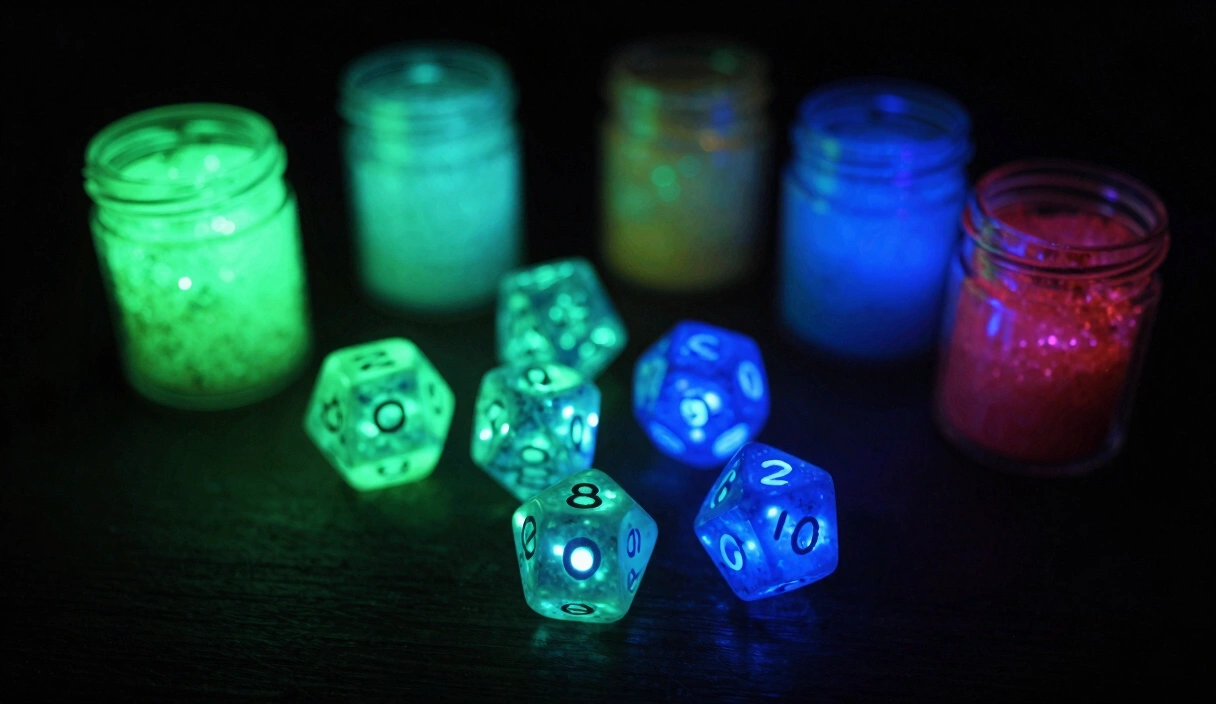
Glow in the Dark Dice: The Science of Making Dice That Actually Glow
Most glow dice barely glow. The fix is strontium aluminate at 15% by weight, layered pours, and 40 PSI cure. Here's the exact method for nuclear-bright dice.