Resin Safety Tips: Protecting Yourself While Making Dice
Epoxy resin isn't craft glue. Before your first pour, learn the respirator, gloves, and ventilation setup that keeps dice making from becoming a health story.
Contents
Have you ever opened a bottle of resin, taken a breath, and thought that can’t be great for me? You were right. That instinct is worth listening to — because epoxy resin isn’t craft glue, and the consequences of ignoring its chemistry don’t always show up immediately. They show up months or years later, when your body decides it’s had enough.
This is the article I wish someone had handed me before my first pour. Not to scare you away from making resin dice — the craft is worth every hour — but because five minutes of prep keeps this hobby safe for the long run. Every piece of safety gear listed here is cheaper than a trip to urgent care.
Why Resin Safety Matters
Here’s the honest truth: most dice makers underestimate epoxy resin because it comes in friendly packaging with colorful labels. It looks approachable. It doesn’t smoke or spark. But epoxy resin is a reactive chemical system. Part A (the resin) and Part B (the hardener, typically an amine compound) undergo an exothermic cross-linking reaction. The fumes produced during mixing and curing contain volatile organic compounds, and the uncured liquid is a known skin sensitizer.
Sensitization is the word that should get your attention. Unlike a burn or a cut, sensitization is your immune system learning to overreact to a substance — permanently. Once your body develops an allergy to epoxy compounds, every future exposure triggers a reaction. Rashes, swelling, breathing difficulty. There is no “building tolerance.” There is no reversal. People who ignored skin protection for months have had to quit resin work entirely because their hands blister at the faintest contact.
You might pour resin fifty times with bare hands and feel fine. The fifty-first time, your body flips a switch that doesn’t flip back. That’s not a scare tactic — it’s immunology.
The gear described below isn’t expensive. A proper respirator, nitrile gloves, and splash goggles total less than $40. You already own windows that open. The question isn’t whether you can afford to protect yourself. It’s whether you can afford not to.
Respiratory Protection
A paper dust mask does nothing against resin fumes. Read that again. Those white disposable masks you see at the hardware store filter particles — sawdust, drywall dust, pollen. Resin fumes are vapors: chemical compounds in gas form that pass straight through paper fibers as if they aren’t there. Wearing a paper mask while mixing resin is security theater.
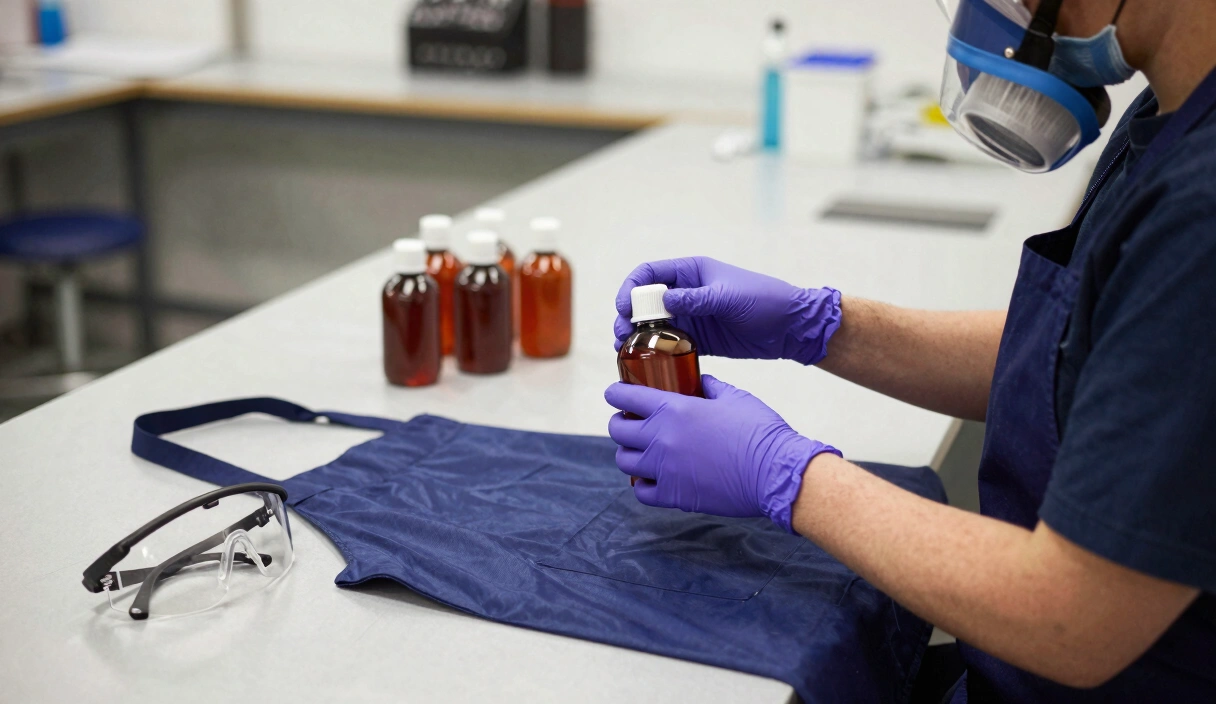
What you need is a half-face respirator with organic vapor cartridges rated P100. The 3M 6200 half-face respirator (medium size fits most adults) paired with 3M 2097 P100 filters is the standard setup in the dice-making community, and for good reason — it’s comfortable enough to wear for an hour-long session, seals well against most face shapes, and the cartridges are widely available.
When to Wear It
Put the respirator on before you open any resin containers. Wear it through mixing, pouring, and cleanup. Keep it on until the resin is in a pressure pot or otherwise sealed and you’ve left the workspace.
When to Replace Filters
If you smell anything through the respirator, the cartridges are spent. Replace them immediately. Even without odor breakthrough, replace cartridges every 40 hours of use or every 6 months — whichever comes first. Store the respirator in a sealed zip-lock bag between sessions to extend cartridge life. Leaving it on an open shelf lets ambient air slowly exhaust the activated carbon.
Maker’s Note: I used to toss my respirator on the workbench after each session. Filters lasted about three weeks. Once I started sealing it in a gallon zip-lock, the same cartridges lasted over two months. A 30-second habit that saves $15 a month.
Skin Protection
Your skin is not a barrier against epoxy — it’s a pathway. Uncured resin and hardener absorb through skin on contact. Every unprotected exposure adds to your cumulative sensitization load. You won’t feel it happening. There’s no sting, no redness at first. The damage is immunological, building silently beneath the surface until your body crosses a threshold it can’t uncross.
Nitrile Gloves, Not Latex
Use nitrile gloves, not latex. Latex gloves degrade on contact with many resin formulations and can themselves cause latex allergies with repeated use — trading one sensitization risk for another. Nitrile resists epoxy, polyurethane, and most solvents you’ll encounter during cleanup.
Buy them in boxes of 100. They’re disposable. Change them the moment resin gets on the outside surface, and change them between mixing and handling molds to avoid spreading uncured resin to surfaces you’ll touch bare-handed later.
If Resin Contacts Your Skin
Don’t reach for acetone. Acetone is a solvent, and while it dissolves resin effectively, it also strips your skin’s natural oils and opens pores — actually driving resin compounds deeper into your skin. Instead:
- Wipe the area immediately with a dry paper towel to remove the bulk.
- Wash thoroughly with soap and warm water. Dish soap works well.
- If resin has started to set on skin, use a waterless hand cleaner (like Fast Orange with pumice) to gently scrub it away.
- Moisturize afterward. Your skin needs its barrier restored.
Ventilation
You might have the best respirator on the market, and you should still ventilate your workspace. A respirator is personal protection — ventilation is environmental protection. It reduces the ambient concentration of fumes for everyone and everything in the room, including pets.
What Actually Works
A garage with the door open is one of the best beginner setups. You get massive air exchange, concrete floors that don’t stain permanently, and enough space to keep your supplies organized. Add a box fan blowing outward in a window or side door and you have cross-ventilation that rivals many commercial workshops.
An exhaust fan pulling air out of the room is the next best option if you’re working indoors. Position it so air flows from behind you, across the work surface, and out through the fan. You want fumes moving away from your breathing zone, not pooling around your face.
Open windows are the bare minimum. Two windows on opposite sides of the room create cross-flow. One window does very little — air needs somewhere to go.
What Doesn’t Work
An enclosed room with the door shut and no ventilation. Picture this: you’re mixing resin at your desk, windows closed because it’s January, door shut so the cat doesn’t walk through your workspace. Fumes accumulate in that sealed box for the entire 24-hour cure. Even after you leave, the resin is still off-gassing. You sleep two rooms away while VOCs quietly fill the hallway. This is how chronic low-level exposure happens without anyone noticing.
Safety First: If you can’t ventilate a room properly, don’t pour resin in it. Move to the garage, the porch, or wait for weather that lets you open windows. No set of dice is worth compromised lung function.
Eye Protection
Splash goggles. Not safety glasses — splash goggles.
Safety glasses leave gaps at the top, bottom, and sides. Mixed resin is thin enough to splash when you pour, drip from a mixing stick, or flick off a stirring spatula. A single drop of uncured hardener in your eye is a medical emergency, not an inconvenience. Amine hardeners are corrosive to ocular tissue.
Sealed splash goggles — the kind that look like chemistry lab goggles with a flexible gasket around the edges — cost $8 to $12. They fit over prescription glasses. They fog up sometimes, and that’s annoying, and it’s still better than explaining to an ophthalmologist how you got epoxy hardener in your cornea.
Anti-fog models exist. A tiny drop of dish soap rubbed on the inside lens and wiped clear also works surprisingly well. No excuses.
Cleanup and Disposal
The pour is done, the dice are curing in the pressure pot, and your workbench is spotted with drips and half-cured puddles. How you handle cleanup matters — for your health and for your plumbing.
Never Pour Resin Down the Drain
Liquid resin will cure inside your pipes. It’s not water-soluble. It won’t dissolve. It will form a rock-hard plug in your P-trap that no drain cleaner can touch. A plumber will charge you far more than that batch of dice was worth.
Cure Scraps Before Trashing
Any leftover mixed resin, contaminated mixing cups, or used stir sticks should be allowed to fully cure (24 to 72 hours depending on your resin) before going in the trash. Cured resin is inert — it’s essentially plastic. Uncured resin in a landfill leaches chemicals into groundwater. Let it harden, then toss it.
If you have a large amount of leftover mixed resin, spread it thin on a piece of cardboard rather than leaving it in a deep cup. Deep pools of curing resin generate significant heat — enough to melt plastic cups, scorch surfaces, or in extreme cases, produce smoke.
Cleaning Tools
Acetone dissolves uncured resin from silicone mats, metal tools, and reusable mixing containers. Use it with nitrile gloves in a ventilated area — acetone fumes are their own respiratory concern. A small amount on a paper towel handles most spills.
Isopropyl alcohol (90% or higher) is the safer option for wiping down work surfaces and for cleaning resin off your skin if soap and water aren’t cutting it. It’s less aggressive than acetone and won’t damage most surfaces.
Frequently Asked Questions
Is resin toxic after it cures?
Fully cured epoxy resin is considered inert and food-adjacent safe (though not FDA food-contact approved for most craft resins). The chemical reaction is complete — no more off-gassing, no more skin absorption risk. The danger exists during mixing, pouring, and the curing window. Once your dice are hard and polished, they’re safe to handle with bare hands for thousands of rolls.
Can I use resin while pregnant?
Most resin manufacturers explicitly recommend against use during pregnancy due to the VOC exposure and the lack of comprehensive safety data on fetal effects. Consult your doctor, but the precautionary principle applies strongly here. If you’re pregnant or trying to become pregnant, this is a good time to focus on mold-making, design work, or other non-chemical aspects of dice making.
How do I know if I’ve become sensitized to resin?
Common signs include contact dermatitis (red, itchy, blistering skin) at resin exposure sites, respiratory symptoms like wheezing or tightness after working with resin even with ventilation, and reactions that appear faster and more severely with each exposure. If you notice any of these patterns, stop resin work immediately and see a dermatologist or allergist. Early recognition limits the severity — continued exposure after sensitization begins makes the allergy dramatically worse.
Do I need all this gear for UV resin too?
Yes. UV resin contains photoinitiators and acrylate compounds that carry their own sensitization risks. The fumes are different from epoxy but still warrant a respirator. Nitrile gloves and eye protection are non-negotiable for any resin system. The chemistry varies, but your body doesn’t distinguish between types of permanent allergic reactions.
So — that instinct you had when you first opened a bottle of resin and thought something smelled off? Trust it. Respect the chemistry, wear the gear, and ventilate the room. The safety setup takes five minutes at the start of each session. The craft lasts a lifetime — and with the right precautions, so does your ability to enjoy it.
Related Articles

How to Make Resin Dice: Mixing, Pouring, and Curing Done Right
From measuring resin by weight to pulling bubble-free dice from a pressure pot, this is the resin-specific process that separates cloudy pours from crystal-clear sets.
Best Resin for Dice Making: 5 Brands Tested and Ranked
I poured dice with five different resins so you don't waste money guessing. Honest pros, cons, and a clear winner for every budget.
Dice Making Techniques: 6 Methods from Basic Pours to Liquid Core
6 resin dice techniques ranked by difficulty with exact steps, materials, and failure points. Data from 200+ pours across petri, galaxy, inclusion, and liquid core methods.