How to Perform a Dice Balance Test: Is Your Luck Real?
Learn how to test your dice for balance using the salt water float test and statistical rolling methods to ensure your TTRPG games are fair.
Contents
Have you ever wondered if that “unlucky” d20 of yours is actually cursed, or if there is a physical reason it keeps landing on a natural one? Whether you are a dedicated D&D player or a dice maker trying to level up your craft, knowing if a die is truly balanced is the only way to separate bad luck from bad manufacturing.
Why Dice Balance Matters (and Why It Often Doesn’t)
When we talk about balance, we are really talking about fairness. A perfectly balanced die has an equal probability of landing on any given face. For resin dice makers, balance is often disrupted by internal air bubbles, heavy inclusions like metal gears, or even uneven sanding that changes the geometry of the faces.
Safety First: Avoid “training” your dice. Storing your dice with the 20-face up won’t make them roll high. Gravity isn’t that kind to plastic, and you are just wasting shelf space.
The truth is, for most home games, a slight imbalance won’t destroy your campaign. Most factory-made dice are slightly off because of the tumbling process used to smooth their edges. Unless a die is radically weighted, the “chaos” of a human roll usually masks minor imperfections. However, if you are selling your work or playing in a high-stakes tournament, you need to know for sure.
The Honest Truth: I used to think every air bubble was a death sentence for a die. I spent weeks throwing out sets that probably rolled perfectly fine, just because I saw a tiny void near the 1-face. You don’t have to be that paranoid, but you should know how to spot the real offenders.
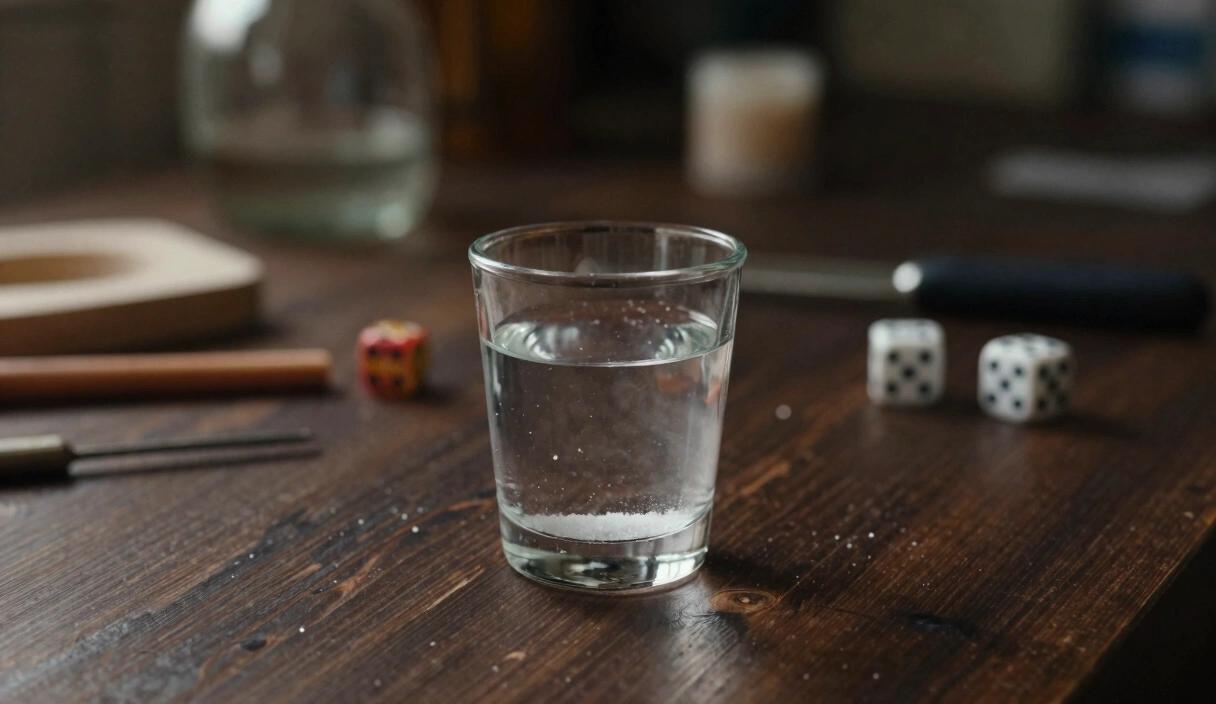
The Salt Water Float Test: A DIY Legend
The salt water test is the most common method you will see on r/DiceMaking or YouTube. It works on the principle of buoyancy: if a die is improperly weighted, the heavier side will sink to the bottom, causing the lighter side (the “biased” number) to float to the top.
Here is how you do it properly:
- Get the Water Ready: Fill a small glass with about 1/3 cup of warm water. Warm water helps the salt dissolve faster.
- Supersaturate: Add salt one tablespoon at a time, stirring vigorously. You need to keep adding salt until it no longer dissolves and begins to settle at the bottom. This is called a supersaturated solution.
- The Float: Gently place your die in the water. Most resin dice will float in this heavy brine.
- The Spin: Use your finger or a chopstick to flick the die and make it spin. Do this at least ten times.
Worth knowing: Standard epoxy resin has a density of roughly 1.1–1.2 g/cm³. To make it float, you need to raise the water’s density above that using a high salt concentration.
If the die consistently rolls to the same number every time you flick it, you have a balance issue. If it shows a variety of numbers, it is balanced enough for the table.
The smell of salt water in the workshop, the flick of a finger, and that moment of tension as the d20 bobs back up — it is the unofficial ritual of every new dice maker.
The Pro Approach: Statistical Rolling (Chi-Square)
While floating is fun, it has limits. It doesn’t work for metal dice (they will never float) and it only checks internal weight, not external geometry. If you want to be a “dice scientist,” you need the Chi-Square test.
If you hated high school math, don’t panic. You don’t need a degree; you just need a spreadsheet and a lot of patience.
The goal is to roll the die enough times to see if the distribution of results matches what we expect by pure chance. For a d20, you should roll it at least 100 times. For a d6, 30 rolls is the minimum.
Delta’s Simplified Method for a d20 (100 rolls):
- Roll 100 times and record how many times each face appears.
- For each face, subtract 5 (the expected number) from your actual count.
- Square each of those results and add them all together.
- If your total is 150 or less, your die is balanced.
This method accounts for the “noise” of random chance. Even a perfect die won’t land on every number exactly five times in 100 rolls, but it should stay within that statistical margin.
Signs Your Dice are Unbalanced
Before you break out the salt, do a quick visual inspection. If you are making your own dice, these are the common culprits:
- Large Voids: Air bubbles trapped near a face will make that side lighter. This is why using a pressure pot is so critical.
- Heavy Inclusions: Putting a solid metal skull or heavy glitter in resin can create a “weighted” effect if the inclusion isn’t centered.
- Over-Sanding: If you spend too much time on one face with your Zona papers, you can actually flatten the dome of the die, making it more likely to “land” on that larger surface area.
Quick check: If one side feels sharper or flatter than the rest, stop sanding and recalibrate. Your luck depends on geometry just as much as weight.
FAQ: Common Dice Balance Questions
Can I fix an unbalanced die? Not really. Once the resin cures, any internal weight imbalance is permanent. If the issue is external (uneven faces), you might be able to re-sand it, but it’s usually easier to just pour a new one.
Do clear dice roll better than opaque ones? Clear dice are generally more reliable because you can see internal flaws like bubbles or sinking pigments. With opaque dice, you are “rolling blind” unless you perform a balance test.
Does the paint in the numbers affect balance? In theory, yes. In practice, no. The amount of acrylic paint used is so microscopic that it won’t affect the center of gravity in any meaningful way.
The Honest Truth About Balance Testing
I have to be honest with you: no DIY test is 100% perfect. The salt water test only tells you if the weight is off, and the rolling test requires hundreds of trials to be truly accurate. Even the most “precision” sharp-edge dice have tiny variations that could be detected by a laboratory.
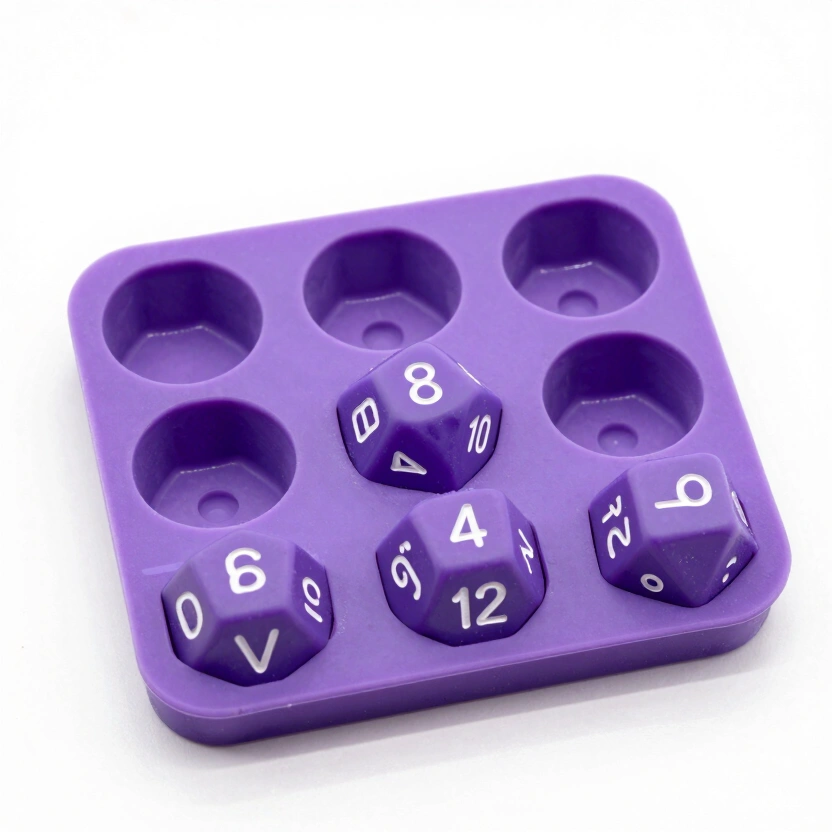
LET'S RESIN Polyhedral Dice Mold Set (7 Shapes)
Stereoscopic 7-piece silicone mold for D4-D20. Pre-made sprue channels. Top-selling beginner mold.
Check Price on Amazon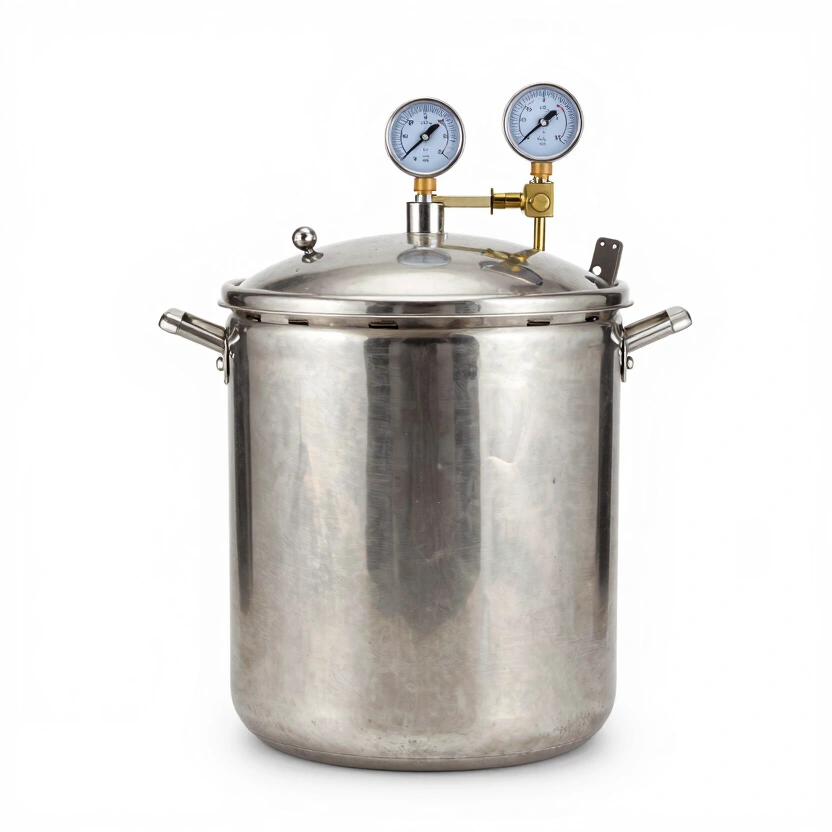
California Air Tools 255C Pressure Pot (2.5 gal)
Purpose-built for resin casting. Coated steel tank, portable. The #1 recommended pressure pot for dice makers.
Check Price on Amazon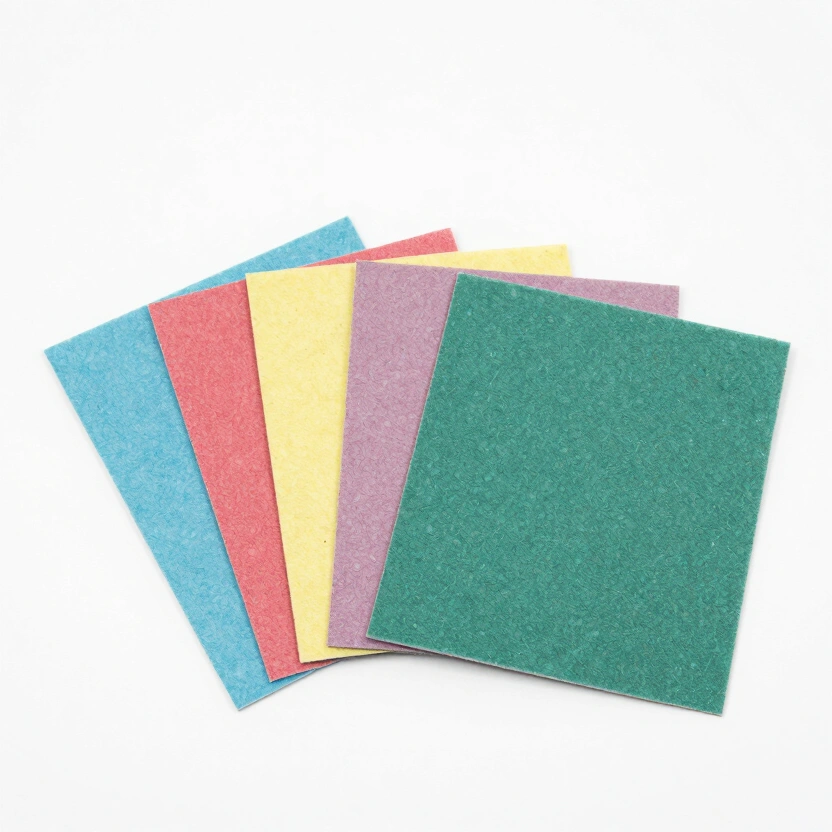
Zona 37-948 Polishing Paper Assortment (1-30 Micron)
6 progressive grits from 30µ to 1µ. The gold standard for hand-polishing sharp-edge dice to glass clarity.
Check Price on Amazon* Affiliate links. Prices last updated March 6, 2026.
If you are just playing at home with friends, don’t let the fear of balance ruin your fun. Test your favorites, retire the ones that are obviously broken, and remember that half the fun of TTRPGs is blaming the dice for your character’s poor decisions.
If you are just starting out and want to avoid these issues from the jump, check out our guide on getting started with dice making.