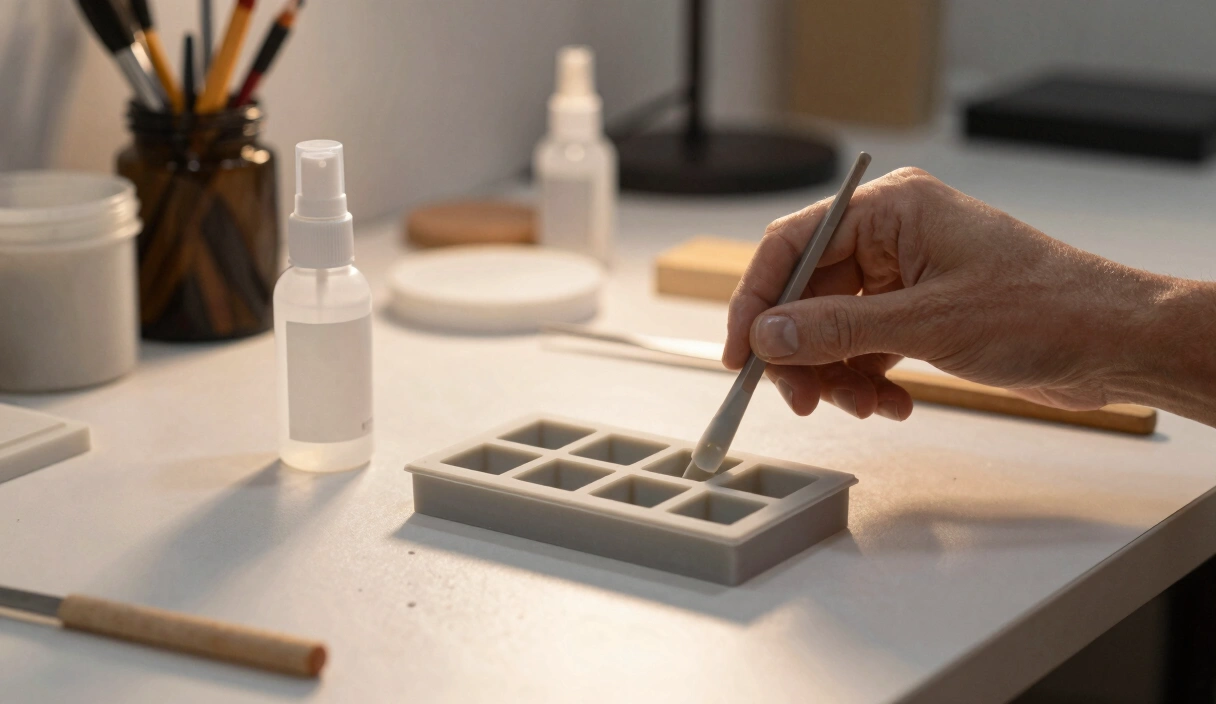
Silicone Dice Molds: Sprue vs. Cap, Which Brands to Trust, and What to Avoid
Sprue molds or cap molds? NanoLabMaker or House of Molds? Here's the practical guide to choosing the right silicone dice mold for your skill level and goals.
Contents
The first silicone dice mold I held surprised me. I’d been expecting something rigid — like a chocolate mold or a baking tin. What I got was a soft, flesh-colored block that flexed when I squeezed it, with twenty tiny cavities sunk into the surface in perfect geometric precision. Each one smaller than a thumbnail, each one a different polyhedral shape. I turned it over and found an identical block with the same cavities, designed to mate with the first.
I didn’t understand what I was holding yet. That understanding came after three failed pours, two sticky batches, and one batch that came out so clean I held a die up to the window and watched light pass straight through it.
The mold made the difference. Here’s how to pick the right one.
Two Types of Silicone Dice Mold
Every silicone dice mold on the market falls into one of two categories. Understanding them is the first decision you’ll make as a dice maker, and it affects everything after it.
Sprue Molds
A sprue mold is a single piece of silicone with cavities for each die shape and a channel — the sprue — that runs from the top of each cavity to the surface. You pour mixed resin down the sprue, fill the cavity, let it cure, and flex the silicone to pop the die out.
The pour channel cures solid too, leaving a small nub (also called the sprue) attached to one face of your die. You’ll need to cut or sand it flush. Depending on your finishing approach, this takes anywhere from two minutes of rough sanding to twenty minutes of precise work if you’re chasing clean faces.
Sprue molds are forgiving. The open design means air has an easy path out as resin flows in. They’re cheaper to manufacture, so they cost less — a complete 7-die polyhedral sprue mold set runs $15-35 from quality suppliers. They’re also where most dice makers start, and for good reason: the learning curve is shallow, the setup is simple, and failures are obvious (which makes them useful for diagnosing problems).
Cap Molds
A cap mold is two pieces. The body piece holds the die cavities with pour holes at the top. After filling with resin and giving it a short initial gel time, you press the cap piece onto the body, sealing the top of each die. The cap creates the final face of the die under slight compression.
The result: no sprue to remove, cleaner parting lines, and sharper face definition. This is the foundation of sharp-edge dice making — the style where edges are crisp enough to read at a glance and polished to optical clarity.
The trade-off is technique sensitivity. Too early on the cap, and resin squeezes out the sides. Too late, and the resin has gelled too firm to conform. The window is real but learnable — most makers nail it within three or four pours.
Cap molds cost more: $25-60 for a quality 7-die set, with premium versions running higher.
Data Point: A full polyhedral set in a sprue mold uses roughly 40-60 grams of resin per pour. Cap molds use slightly less — the cap prevents overflow — but the real saving is time: no sprue removal means less post-processing per batch.
Once you understand the two types, the confusing Amazon listings, the YouTube debates about “which mold should I buy” — they all resolve. You’re not comparing molds; you’re choosing a workflow. The right workflow depends on what you’re trying to make.
What Makes a Quality Mold
Every silicone dice mold looks similar in a listing photo. The differences that matter are invisible until you pour into one.
Inner surface finish. The surface of the mold cavity transfers directly to the surface of your die. A mirror-finish interior produces glossy dice that pop out with no polishing required. A matte or textured interior produces dice with a surface that requires wet sanding to achieve clarity. Quality molds — NanoLabMaker, House of Molds — use polished masters to create mirror-finish cavities. Many cheap Amazon molds don’t.
Silicone durometer. This is the hardness rating of the silicone. Too soft and the mold warps under the pressure of 40 PSI in a pressure pot, producing distorted dice. Too hard and the mold tears at the edges when you try to demold. The sweet spot for dice molds is typically Shore A 20-30. Manufacturers rarely list this number, but it’s implied by price — quality silicone at the right durometer costs more to produce.
Registration accuracy between mold halves. For cap molds specifically, the two pieces must align precisely. A misaligned cap produces a visible step at the parting line — the seam where the two halves meet. On a sharp-edge die, that step is immediately visible. Good molds have registration pins or closely toleranced edges that prevent slipping.
Vent placement. Air has to go somewhere as resin fills the cavity. Quality molds have small vents — sometimes invisible without close inspection — positioned at the top of each cavity so air can escape upward while resin fills from below. Molds without proper venting trap air pockets at corners and faces, producing voids in finished dice.
The Brands Worth Buying
NanoLabMaker is the community standard for a reason. US-based, consistent quality, and they post tutorials showing exactly how their molds perform. Their polyhedral sets (both sprue and cap versions) have mirror-finish cavities and proper vent placement. Their website also has a useful size guide — not all D20s are the same diameter, and NanoLabMaker specifies the finished die dimensions. If you’re buying your first mold and want it to work, start here.
House of Molds is an Italian maker with more specialty and artistic designs — themed dice, unusual face treatments, decorative inlays. Quality is high. Shipping from Europe adds time and sometimes cost. Worth it for specific designs; not the first buy for functional learning.
CritMaker makes both standalone molds and starter kits. The kits bundle mold, resin, and accessories in one order, which is useful if you want to start without researching each component separately. Mold quality is solid. Their D20 is particularly popular in the community.
Now for honesty: cheap Amazon molds sometimes work fine. I’ve had decent results from $8 mold sets. But the failure rate is higher, and when a batch comes out wrong — sticky faces, voids at corners, a seam that doesn’t close — you often can’t tell whether it’s the mold, the resin, the ratio, or the cure conditions. With a quality mold, you can eliminate it from the list of suspects. That diagnostic clarity is worth the price difference, especially when you’re still learning.
Warning: Avoid molds marketed for candy, chocolate, or soap making. These are often too shallow, the face proportions don’t match standard polyhedral dice geometry, and the dice they produce won’t roll fairly. Dice molds are precision tools. The cavities have to be correct.
Choosing the Right Mold for Your Goals
If you’re in your first month of dice making: Get a sprue mold. One full polyhedral set. Pour clear resin first — no colorant — so you can see exactly what the mold produces before adding variables. Read the dice making supplies guide to make sure you have the supporting tools before the mold arrives.
If you’re producing dice you want to sell: Cap molds. The absence of a sprue means less post-processing per die, and the sharper face definition produces a more premium-looking result. Pair with a pressure pot running at 40 PSI for the clarity that justifies a higher price point. Run a balance test on your finished dice to confirm they’re fair before listing.
If you want specialty shapes: House of Molds has the widest selection of unusual designs. NanoLabMaker focuses on standard polyhedral sets with high precision. CritMaker sits in the middle — solid standard sets with occasional specialty releases.
Mold Care and Longevity
A quality silicone mold, properly maintained, lasts 50-150 pours before you notice degradation in surface quality. Mistreated, it fails in ten.
After each use: Rinse with warm (not hot) water. Mild dish soap is fine. Don’t scrub with abrasive pads — the interior surface is the thing you’re protecting. Air dry completely before the next pour; moisture trapped in a cavity causes cloudiness in finished dice.
Storage: Store molds flat, away from UV light and heat. Silicone degrades with prolonged UV exposure. The garage shelf in a sunny window is not storage — it’s a shortcut to brittle molds that tear on demolding.
What kills molds fast:
UV resin residue is the main one. If you use UV resin for any reason — patches, fills, repairs — and it cures inside the silicone cavity, it bonds permanently and creates a film that prevents future epoxy pours from releasing cleanly. You’ll notice it as a haze or white film in the cavity.
I discovered this the hard way. A UV patch repair on a die that wasn’t releasing well — I dabbed UV resin into the cavity and cured it with a lamp. The next ten pours from that mold all had a film on one face. The UV resin had bonded to the silicone surface and wasn’t coming out.
Sulfur-containing materials also inhibit platinum-cure silicone. This matters if you’re making your own molds — certain clays, tapes, and latex products prevent silicone from curing properly. For store-bought molds, just keep them away from materials with sulfur content.
The mold care and maintenance guide covers the full cleaning and storage protocol if you want the detailed version.
FAQ
How many pours can a silicone dice mold last? With proper care, 50-150 pours is typical for quality molds. The interior surface gradually loses its mirror finish, which shows up as dice that require more polishing to achieve clarity. Cheap molds often degrade faster, especially under pressure pot conditions.
Can I use a food-grade silicone mold for dice? Technically yes, but the results will be disappointing. Food-grade molds are designed for shallow pours (chocolate, candy, ice) with different geometry than polyhedral dice. The face proportions and cavity depth are wrong for gaming dice. You’ll get objects shaped vaguely like dice, but they won’t roll fairly.
Why are my dice sticking to the mold? Several causes: UV resin contamination on the mold surface (see above), insufficient cure time before demolding, or a mold silicone that has degraded or been treated with something that interferes with release. Try demolding after the full manufacturer cure time — not the “demold time,” the full cure time. Most sticking issues resolve with patience. If you’re consistently having release problems, check the troubleshooting guide for sticky resin.
What’s the difference between sprue and cap molds for sharp-edge dice? Sharp-edge dice require cap molds. Sprue molds produce a rounded parting line at the die equator — the seam where the two halves of the mold meet — that has to be sanded away. This sanding rounds the edge. Cap molds create a cleaner seam that requires less material removal, preserving the edge geometry. If edge sharpness is your goal, cap molds are the path.
Recommended Molds and Finishing
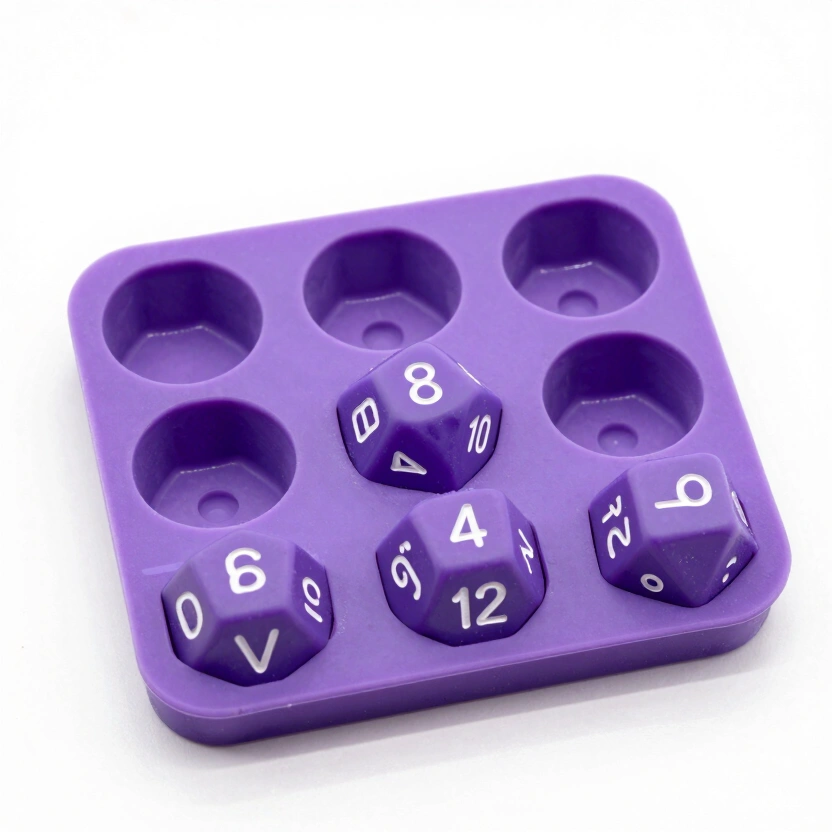
LET'S RESIN Polyhedral Dice Mold Set (7 Shapes)
Stereoscopic 7-piece silicone mold for D4-D20. Pre-made sprue channels. Top-selling beginner mold.
Check Price on Amazon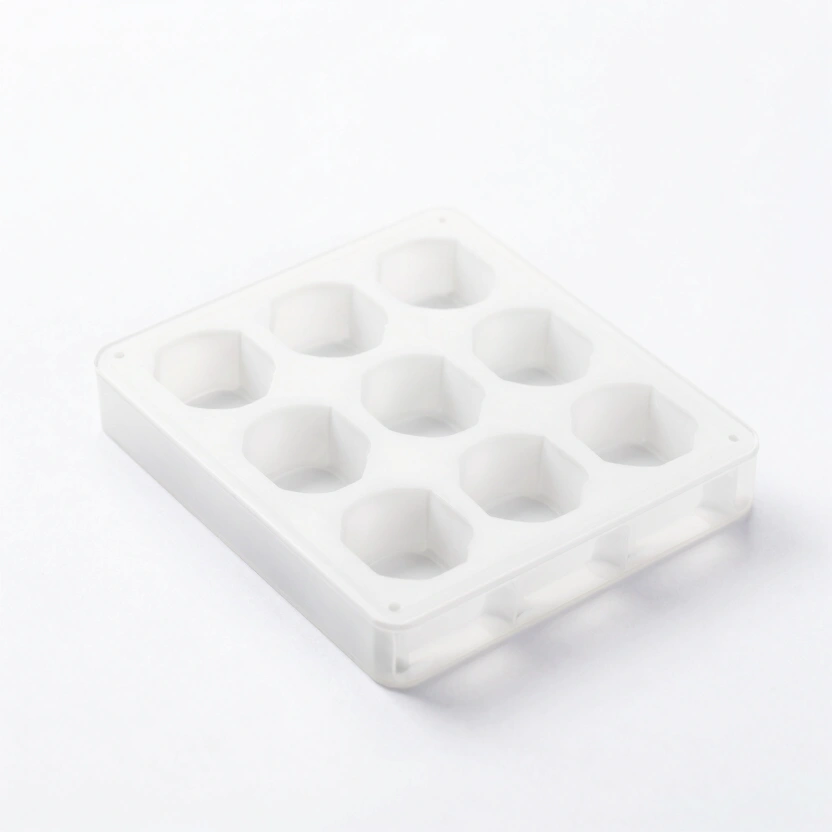
CZYY Sharp Edge Dice Mold (7 Shapes)
Precision slab-style molds for sharp-edge dice. Popular on r/DiceMaking. Requires careful demolding.
Check Price on Amazon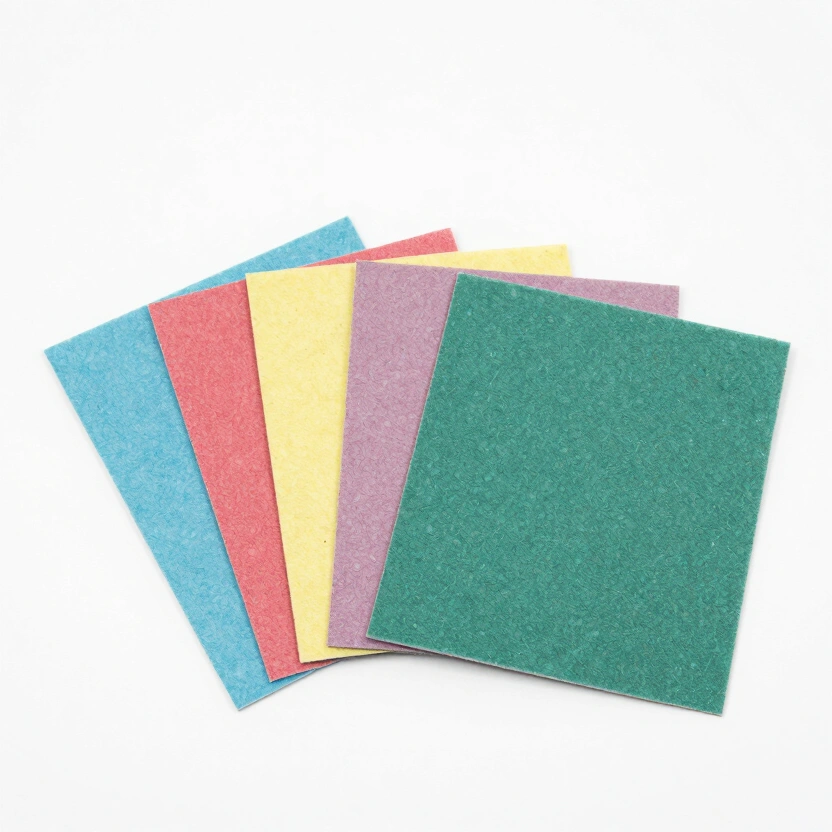
Zona 37-948 Polishing Paper Assortment (1-30 Micron)
6 progressive grits from 30µ to 1µ. The gold standard for hand-polishing sharp-edge dice to glass clarity.
Check Price on Amazon* Affiliate links. Prices last updated March 6, 2026.
By your tenth mold, you’ll own at least six you don’t technically need — a second D20 sprue set because you wanted the larger size, that specialty mushroom dice mold you couldn’t resist, the oversized D6 that looked great in a video — and one mold you use for almost everything. That’s fine. Mold accumulation is a rite of passage.
Start with one. This week: pick sprue or cap based on your goals, order a 7-die set from NanoLabMaker or CritMaker, and pour a clear test batch with no colorant. What comes out of that pour tells you more about your technique — and your mold — than any amount of reading will.
Related Articles
Dice Making Supplies: What You Actually Need (And What Can Wait)
48.7 million search results tell you to buy everything. Here's the tiered breakdown showing exactly what you need first, what can wait, and how to start making dice for under $50.
Pressure Pot for Resin: The Complete Dice Maker's Guide
Bubble-free dice start inside a steel tank. Here's exactly which pressure pot to buy, how to set it up, and the PSI settings that actually work.