Dice Making Kits: Why Most Are a Waste of Money (and the One Exception)
Most dice making kits sell you $15 of supplies in a pretty box for $50. Here's what they leave out, what to buy instead, and the one time a kit actually makes sense.
Contents
In 1963, a chemist at Ciba-Geigy poured the first commercially available two-part epoxy resin and watched it cure into a rigid, transparent block. He was trying to encapsulate electronic circuits. Sixty years later, that same chemical reaction is being sold in pastel-colored boxes on Amazon with names like “DiceCraft Deluxe Starter Kit” and a promise that you’ll be making polyhedral dice by Saturday afternoon. The chemistry hasn’t changed. The marketing has gotten much better.
Dice making kits sit at a strange intersection of hobby crafting. They look like a shortcut — everything you need in one box, one click, one purchase. But after buying three different kits and taking apart what’s actually inside them, I can tell you most are selling a $15 pile of supplies for $40 to $60, while leaving out the components that actually determine whether your dice turn out clear or cloudy.
Here’s what’s really going on.
What’s in a Typical Dice Making Kit
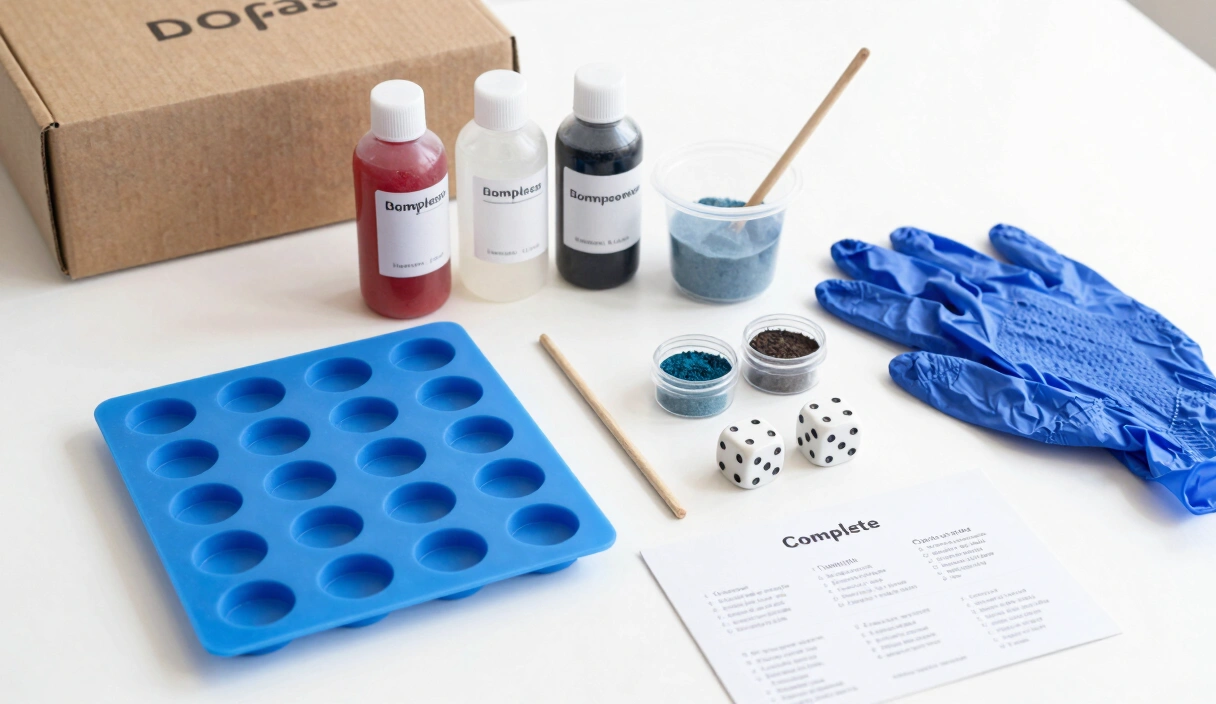
Open any dice making kit on Amazon and you’ll find roughly the same contents. The packaging varies, the quantities shift, but the formula is consistent:
- Silicone molds — Usually one or two molds covering a standard 7-die polyhedral set (D4, D6, D8, D10, D10 percentile, D12, D20). These are thin-walled, open-back molds with no cap or sprue channel.
- Epoxy resin — A small bottle of two-part resin, typically 8 to 16 oz total (Parts A and B combined). Enough for one to three pours depending on mold size.
- Mixing cups — Two to four graduated plastic cups, usually 60 ml or 100 ml.
- Stir sticks — Wooden craft sticks or plastic spatulas.
- Pigment — A few bottles of liquid colorant or a set of mica powder packets, typically three to five colors.
- Glitter or inclusions — A packet of chunky glitter or foil flakes for visual effect.
- Sandpaper — A few small sheets, sometimes grits ranging from 400 to 2000.
That’s the typical spread. What’s missing matters more than what’s included.
Safety First: No kit I’ve seen includes a respirator, nitrile gloves rated for chemical use, or a silicone work mat. Resin fumes are not craft-store harmless — you need a P100 respirator at minimum, and you need it before your first pour, not as an afterthought. Budget $15 to $25 for safety gear the kit won’t provide.
No pressure pot. Open-back molds without pressure curing produce dice riddled with micro-bubbles. Every single kit on the market assumes you’ll pour at atmospheric pressure, which means your dice will look foggy. A pressure pot is what separates hobby-grade results from genuinely clear dice.
No mold release. Most kits skip this entirely. Without a release agent, demolding becomes a fight, and your mold wears out faster.
No polishing compounds. The included sandpaper gets you started, but the jump from 2000-grit to a glassy finish requires polishing compound or a micro-mesh progression. Kits don’t include that final step.
No UV-stabilized resin. The resin in most kits is generic craft epoxy — the same stuff sold for coating tumblers and making keychains. It works. It also yellows noticeably within weeks if your dice sit near a window. Compare that with purpose-made dice resins that include UV inhibitors and stay water-white for months.
Popular Kits Reviewed
I bought these with my own money, poured dice with each one, and photographed the results. No affiliate samples, no sponsored kits.
Let’s Resin Dice Making Kit (~$36)
The most common kit on Amazon, and the one most beginners land on.
What you get: Two 7-die molds (sharp-edge and round), 8 oz resin (4 oz each part), 10 colors of liquid pigment, gold foil flakes, mixing cups, stir sticks, droppers, and a small sheet of sandpaper.
Pros:
- Molds are surprisingly decent — clean cavities, legible number impressions
- Pigment colors are vibrant and mix easily
- Enough resin for two careful pours
Cons:
- Resin is thin and yellows fast — visible shift within three weeks on my window shelf
- No instructions for mixing ratios beyond “equal parts”
- Sandpaper is a single grit (600), which is barely a starting point
- Open-back molds only — every pour had visible bubbles
Verdict: Decent molds, throwaway resin. You’ll replace the resin after one session.
Pixiss Dice Making Kit (~$50)
A step up in packaging, with a few more supplies and a slightly larger resin volume.
What you get: Two 7-die molds, 16 oz resin, 12 mica powder colors, glitter set, gold leaf, mixing cups, stir sticks, disposable gloves, and 400/800/1200 sandpaper.
Pros:
- 16 oz of resin is enough for three to four pours — enough to actually learn
- Mica powders are better than liquid pigments for beginners (harder to over-tint)
- Gloves are included, which is more than most kits offer
Cons:
- Resin is thicker than what I’d choose — traps more bubbles during mixing
- Mold quality is a step below the Let’s Resin set — slightly soft edges on the D20
- Mica powders are beautiful but the kit doesn’t explain how much to use (start with 1/8 teaspoon per 30 ml of mixed resin)
- Still no respirator, mold release, or polishing supplies
Verdict: More resin, more colors, slightly worse molds. Better value if you’re purely counting pours.
Jatidne Dice Mold Kit (~$28)
The budget entry. Stripped down to the essentials — sort of.
What you get: Two 7-die molds, 6 pigment colors, glitter, stir sticks, droppers. No resin included.
Pros:
- Cheapest way to get polyhedral molds if you already have resin
- Mold shapes are standard and functional
Cons:
- No resin means you’re buying the most important component separately anyway
- Pigment quality is inconsistent — two of six colors clumped in the resin
- No mixing cups, no sandpaper, no instructions
- Mold silicone is softer than the competition — started tearing at the D4 cavity after five pours
Verdict: This isn’t a kit. It’s a mold set with some glitter thrown in to justify the “kit” label. If you need silicone dice molds, buy molds. If you need a kit, this doesn’t qualify.
Haibon Dice Resin Kit (~$45)
Mid-range with a focus on inclusion variety.
What you get: Two 7-die molds, 8 oz resin, mica powders, dried flowers, foil flakes, glitter in six types, mixing cups, stir sticks, finger cots.
Pros:
- The inclusion variety is genuinely fun — dried flowers and different glitter textures give you creative options
- Mold quality is average but functional
Cons:
- Only 8 oz of resin for a $45 price tag — that’s two pours maximum
- Finger cots instead of proper gloves are laughably inadequate for resin work
- Dried flowers look beautiful in marketing photos but absorb resin and turn translucent brown in the finished die
- No sandpaper at all
Verdict: You’re paying for decorative extras while getting less resin. Pretty on the listing page, disappointing on the workbench.
Why Most Kits Are a Bad Deal
Here’s the math that kit sellers hope you don’t do.
I priced out the actual contents of the Let’s Resin kit at $36. Buying those same components individually on Amazon:
| Component | Kit Version | Individual Price |
|---|---|---|
| 7-die silicone mold (x2) | Included | $12 |
| 8 oz epoxy resin | Included | $8 |
| Liquid pigment (10 colors) | Included | $9 |
| Gold foil flakes | Included | $4 |
| Mixing cups (4 pack) | Included | $2 |
| Stir sticks (bag) | Included | $1 |
| Total | $36 | $36 |
Looks like a wash. But that’s the trick — the kit breaks even only if you accept the exact quality of every component. The moment you upgrade the resin to something that doesn’t yellow (like Art ‘N Glow at $25 for 16 oz or Unicone Art at $40 for 16 oz), you’ve doubled your resin volume and quadrupled your quality for the same total spend.
I wasted my first two months using kit resin because I thought the kit manufacturer had matched the components to work together. They hadn’t. They’d matched the cheapest resin to the highest margin. The molds don’t care what resin you pour into them. The pigments don’t care what brand they’re suspended in. There is no synergy in a kit — just bundled convenience at bundled markup.
Budget Reality: A kit gives you worse resin, adequate molds, and filler accessories for the same price as buying better components individually. The savings are an illusion.
The worst part: you’ll replace most of the kit contents within a month. Better resin first. Then better molds. Then the sandpaper, the mixing cups, the pigments. The kit becomes a temporary placeholder for every item in it.
Build Your Own Starter Kit
Skip the box. Here’s exactly what to buy, with current Amazon prices as of early 2026.
The Essentials (~$85 total)
| Item | Specific Product | Price |
|---|---|---|
| Resin (16 oz) | Art ‘N Glow 16 oz | $25 |
| 7-die polyhedral mold (x2) | Drole sharp-edge mold set | $14 |
| Mica powder set (12 colors) | SEISSO 36-color set | $10 |
| Mixing cups (50 pack) | Pixiss graduated 2 oz cups | $8 |
| Silicone stir sticks (5 pack) | Reusable silicone spatulas | $6 |
| Nitrile gloves (box of 100) | Venom Steel 6-mil nitrile | $12 |
| P100 respirator | 3M 6200 half-face + P100 cartridges | $28 |
| Mold release spray | Mann Ease Release 200 | $14 |
| Sandpaper assortment (400-3000 grit) | Micro-mesh or Zone wet/dry set | $8 |
| Total | ~$125 |
The Smart Cuts (~$85 total)
If $125 is above your comfort zone, here’s where to trim without sacrificing results:
- Drop to Art ‘N Glow 8 oz ($15 instead of $25) — enough for two pours to confirm you enjoy the process
- One mold instead of two ($7 instead of $14) — pour one set, evaluate, then buy the second
- Skip mold release initially (save $14) — careful demolding works for the first few pours, though your mold will wear faster
- Trimmed total: ~$85
That $85 gets you better resin, proper safety gear, and the same molds as any kit — plus supplies that scale. The 50-pack of mixing cups lasts months. The respirator lasts years. The mica powders outlast five bottles of resin.
Compare that to a $45 kit that gives you two pours of mediocre resin, no respirator, no mold release, and finger cots. Then ask which is the better deal.
For a more detailed breakdown of everything you’ll need as you grow, check the full dice making supplies list.
The One Kit Scenario Where Buying Makes Sense
I’ve spent 600 words explaining why kits are overpriced. Now the exception.
Gifts. If someone in your life mentioned wanting to try dice making and you need a birthday present by Thursday, a kit is the right call. The Let’s Resin kit at $36 arrives in a presentable box, includes enough components for an afternoon of pouring, and doesn’t require the recipient to research resin brands or track down a respirator (though you should toss one in alongside it).
Testing interest. If you watched one TikTok of someone making galaxy dice and you’re not sure whether you’ll pour a second batch or never touch resin again, a $28 to $36 kit is a reasonable audition fee. You’ll make imperfect dice with bubbles. That’s fine. The point isn’t perfection — it’s figuring out whether the process appeals to you before committing to a real setup.
The key distinction: buy a kit knowing it’s disposable. Don’t expect the resin to match dedicated brands. Don’t expect the molds to last more than ten pours. Don’t expect bubble-free results without a pressure pot. If you walk away after one session, you’ve lost $36 instead of $125. If you get hooked — and resin has a way of doing that — you’ll replace everything in the kit within a month anyway.
Maker’s Note: I bought my first kit as a gift to myself. Made a set of purple dice that looked like frozen grape juice with a head cold. Terrible dice. But I loved the process so much that I ordered Unicone Art resin the same night. The kit did its job — it got me started.
Upgrading From Kit to Real Setup
You poured your kit dice. They’re bubbly, slightly yellow, and the faces aren’t quite flat. You’re hooked anyway. Here’s the upgrade path, in order of impact.
Replace the Resin First
This is the single biggest quality jump. Swap generic kit resin for a UV-stable, low-viscosity formula designed for casting. Unicone Art is the community standard. Art ‘N Glow is the budget alternative. Either one transforms your results overnight — clearer, harder, and color-stable.
Cost: $25 to $40 for 16 oz.
Upgrade Your Molds
Kit molds work, but they wear out fast and the number engravings get soft after a handful of pours. A quality silicone dice mold with cap molds (two-piece molds that close) produces sharper edges and eliminates the open-back pour marks that require heavy sanding. Eventually you’ll want to make your own molds with master dice, but that’s a separate skill tree.
Cost: $15 to $25 for a quality cap mold set.
Add a Pressure Pot
This is the big upgrade — the one that turns hobby dice into gift-quality or sell-quality dice. A pressure pot at 40 PSI compresses micro-bubbles below visible size. The California Air Tools 255C runs about $188. The Harbor Freight modification route gets you there for about $105. Either way, the first time you pull a set of perfectly clear dice from a pressure pot, you’ll wonder why you ever poured without one.
Cost: $105 to $188.
Dial in the Finishing
Once your dice are clear and well-shaped, the finishing process becomes the bottleneck. A proper sanding progression — 400, 600, 800, 1200, 2000, 3000 grit — followed by polishing compound on a microfiber cloth produces a glass-like surface. This is where your dice stop looking handmade and start looking professional. Our sanding and polishing guide covers the full progression.
Cost: $15 to $25 for sandpaper and polishing compound.
Total Upgrade Path
| Stage | What You Buy | Running Total |
|---|---|---|
| Kit | Any starter kit | $36-50 |
| Resin upgrade | Unicone Art or Art ‘N Glow | $61-90 |
| Mold upgrade | Cap mold set | $76-115 |
| Pressure pot | CA Air Tools or HF mod | $181-303 |
| Finishing supplies | Sandpaper + polish | $196-328 |
The full progression lands between $200 and $330. Most dice makers reach this point within two to three months. The kit gets you through week one. Everything after that is the real setup.
If you’re ready to skip the kit entirely and start right, the complete beginner’s walkthrough lays out the full process from first pour to finished set.
Build Your Own Dice Making Kit
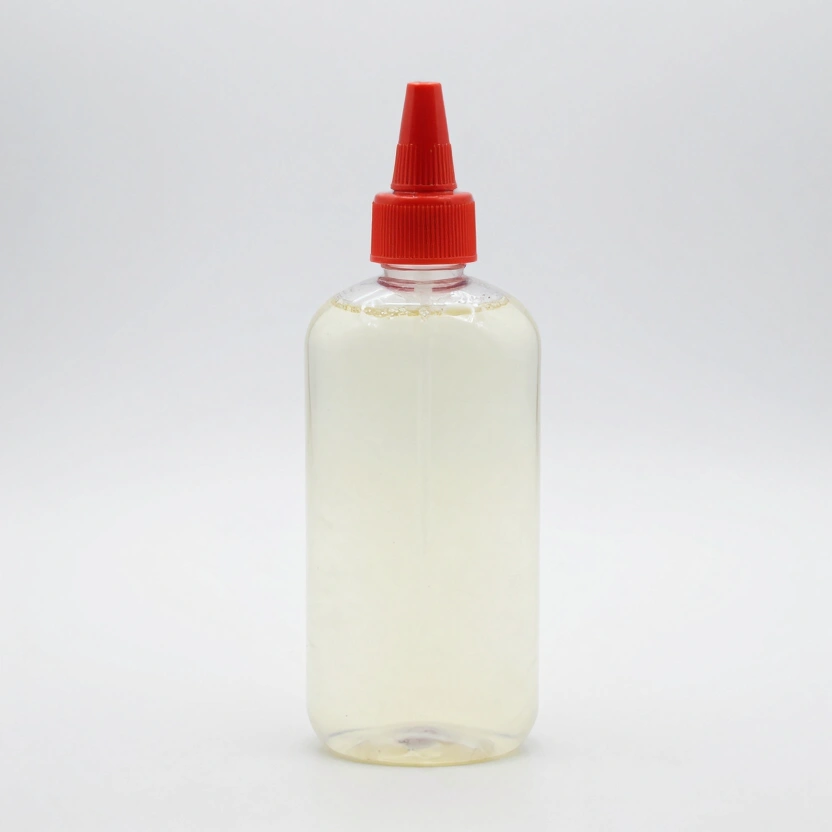
Art 'N Glow Epoxy Resin Kit (32 oz)
Crystal-clear 1:1 mix ratio epoxy. UV resistant, self-leveling. The community favorite for dice casting.
Check Price on Amazon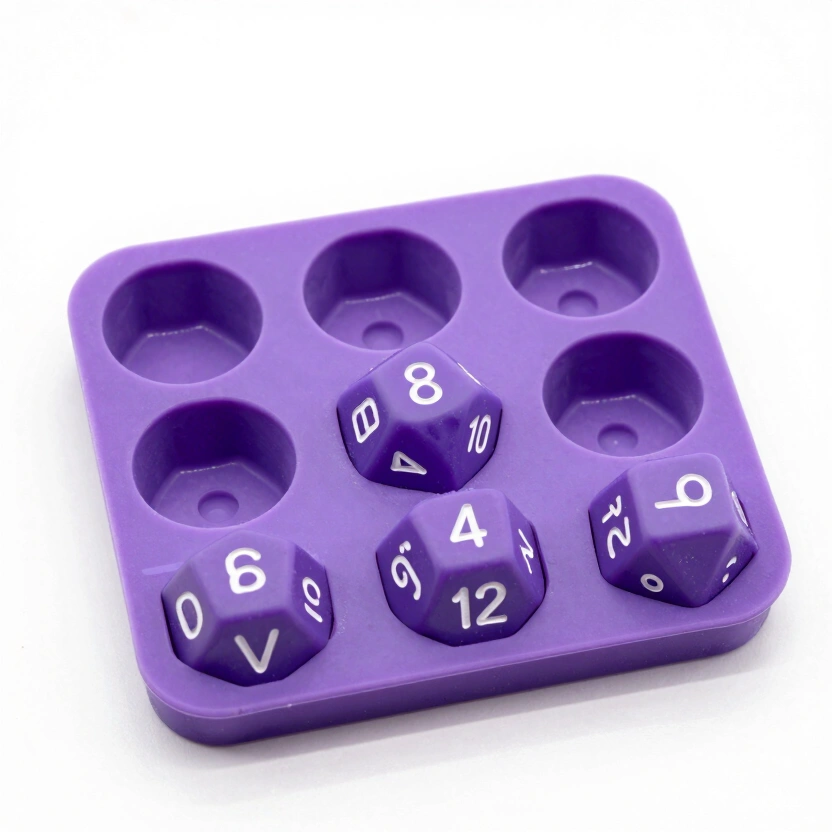
LET'S RESIN Polyhedral Dice Mold Set (7 Shapes)
Stereoscopic 7-piece silicone mold for D4-D20. Pre-made sprue channels. Top-selling beginner mold.
Check Price on Amazon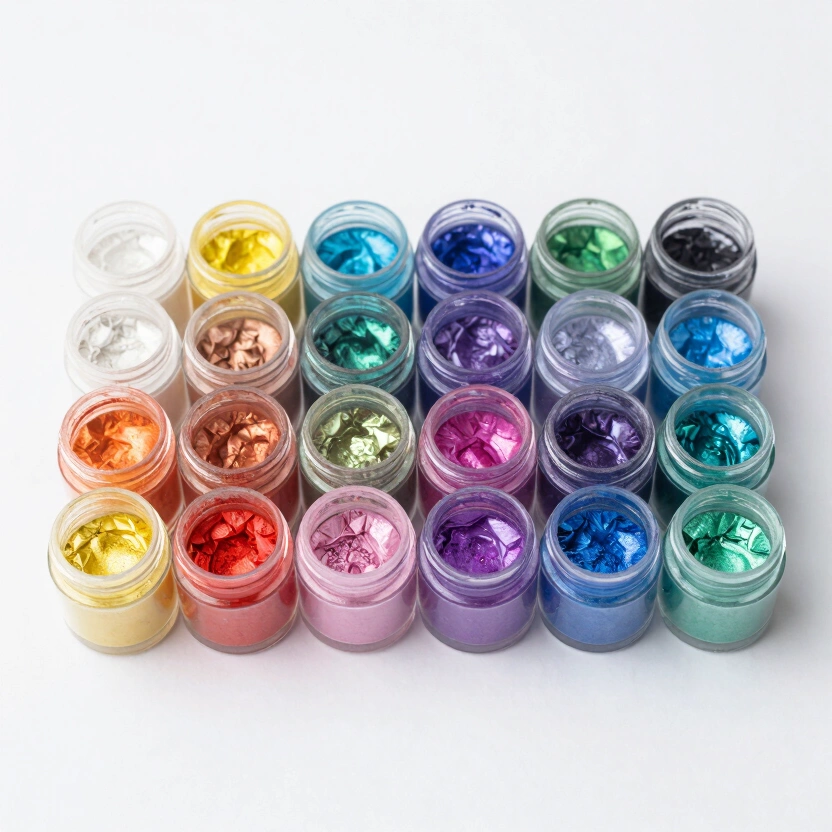
Eye Candy Mica Powder (24-Pack Sampler)
24 vibrant pearlescent pigments. A little goes a long way. Perfect for swirls, layers, and galaxy effects.
Check Price on Amazon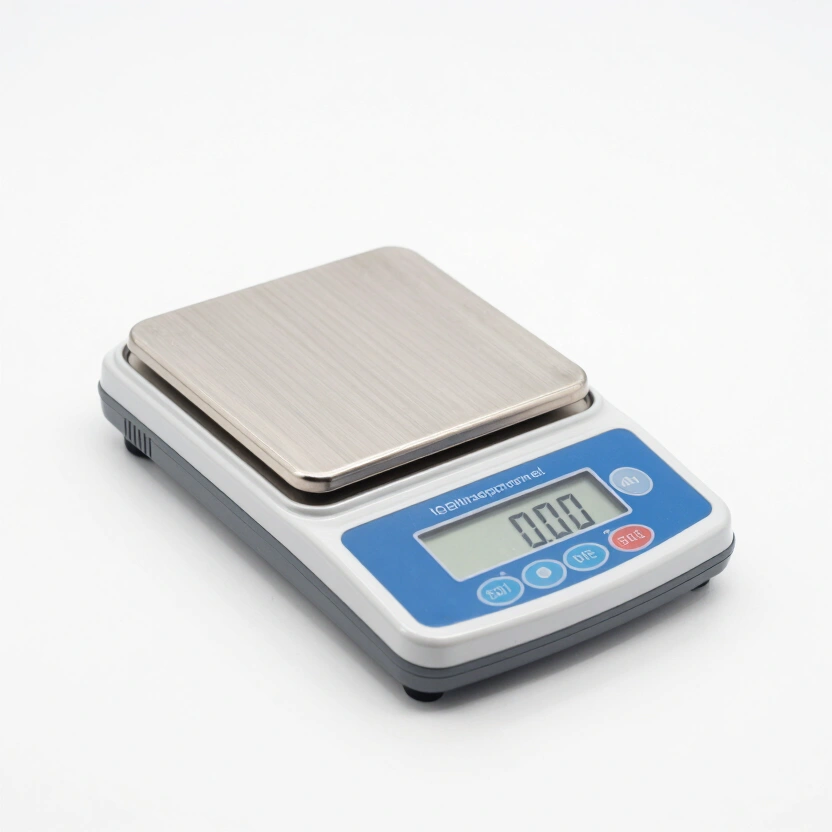
Fuzion Digital Scale (0.01g Precision)
Precise to 0.01g for accurate resin mixing ratios. Tare function, backlit display. Essential for consistent pours.
Check Price on Amazon* Affiliate links. Prices last updated March 6, 2026.
Frequently Asked Questions
Are dice making kits worth it for beginners?
For most beginners, no. The resin quality is poor, safety gear is missing, and you’ll replace every component within a month if you continue the hobby. The one exception is if you’re testing interest with no commitment — a $36 kit is a cheaper audition than a $125 custom setup. But if you already know you want to make dice, buying components separately gives you better quality for similar money.
What resin do dice making kits use?
Most kits include generic two-part epoxy resin with no UV stabilizers and higher viscosity than purpose-made dice resins. This results in faster yellowing and more trapped bubbles. Kit resin works for opaque or heavily pigmented dice where clarity doesn’t matter, but for transparent or lightly tinted sets, you’ll notice the difference immediately compared to brands like Unicone Art or Art ‘N Glow.
Can you make good dice with just a kit and no pressure pot?
You can make dice. You cannot make bubble-free dice. Open-pour casting at atmospheric pressure always traps micro-bubbles, and the open-back molds included in kits make this worse. The results are usable for personal play — most of your friends won’t examine your D20 under a jeweler’s loupe — but they won’t match the clarity of pressure-cured dice. If bubbles bother you, a pressure pot is a requirement, not an upgrade.
How many sets of dice can you make with one kit?
Most kits include 8 to 16 oz of resin. A standard 7-die polyhedral set uses roughly 4 to 6 oz of mixed resin depending on mold size. That gives you one to three complete sets per kit, assuming no spills, no wasted batches, and no over-pours. Realistically, expect two sets from a 16 oz kit and one set from an 8 oz kit, because your first pour will use more resin than you expect.
What should I buy instead of a dice making kit?
Build your own starter kit: 16 oz of Art ‘N Glow resin ($25), a Drole sharp-edge mold ($7-14), a 12-color mica powder set ($10), graduated mixing cups ($8), a P100 respirator ($28), and nitrile gloves ($12). Total runs $85 to $125 depending on how much you trim. You get double the resin, proper safety equipment, and components you won’t need to replace after one session. See our full supplies breakdown for the complete list.
This weekend: price out the contents of any kit you’re considering. Add up the individual component costs. Then spend the difference on better resin. Your dice — and your lungs — will thank you.
Related Articles
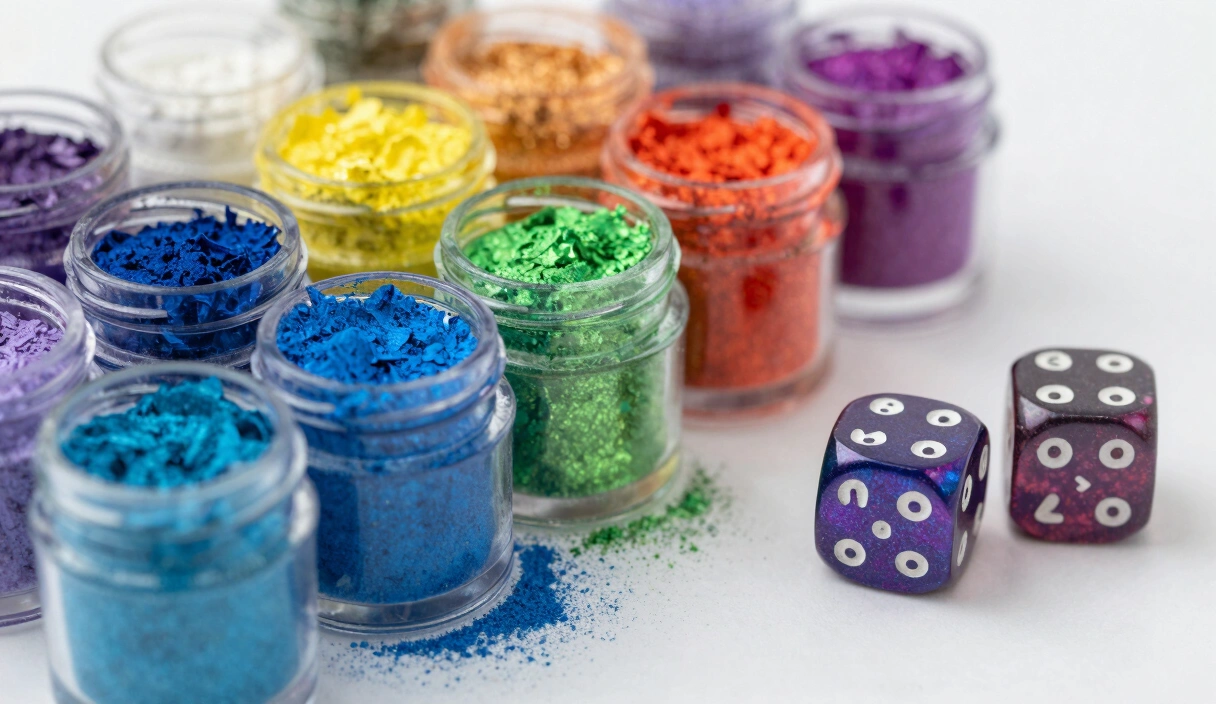
Best Mica Powder for Resin Dice: 4 Brands Tested Side by Side
Tested four mica powder brands in resin dice pours. Honest comparison of particle size, color range, and value so you pick the right one first.
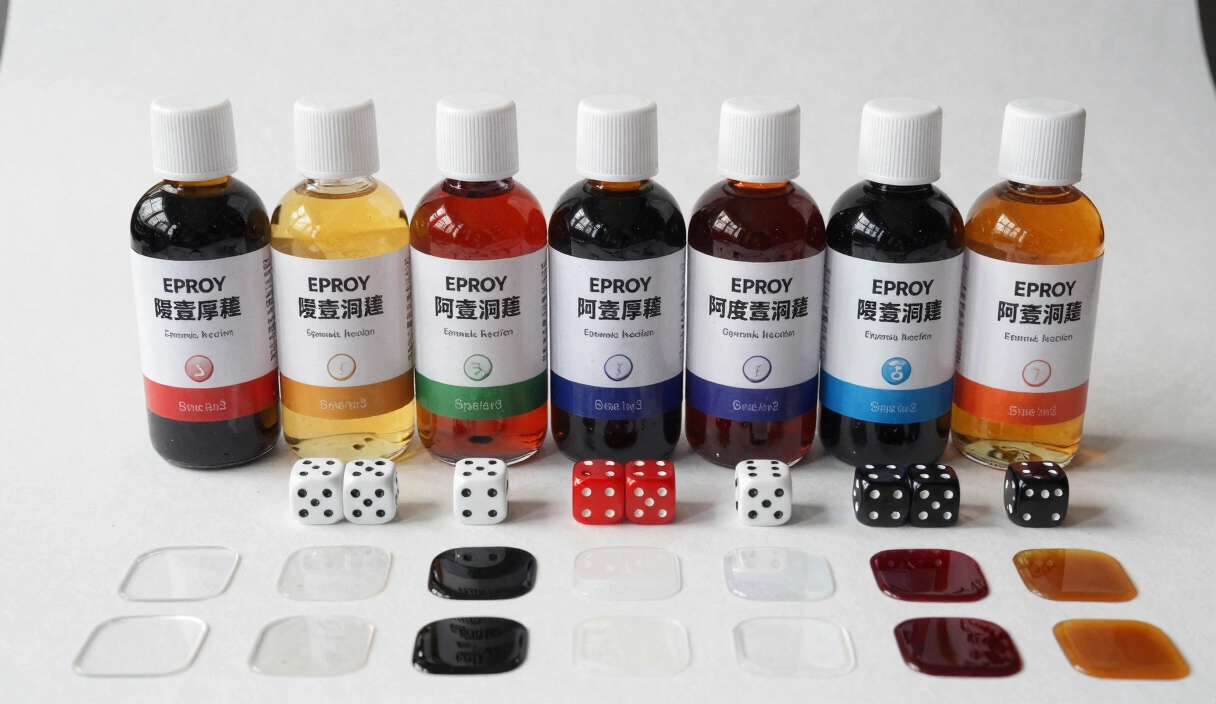
Best Resin for Dice Making: 5 Brands Tested and Ranked
I poured dice with five different resins so you don't waste money guessing. Honest pros, cons, and a clear winner for every budget.
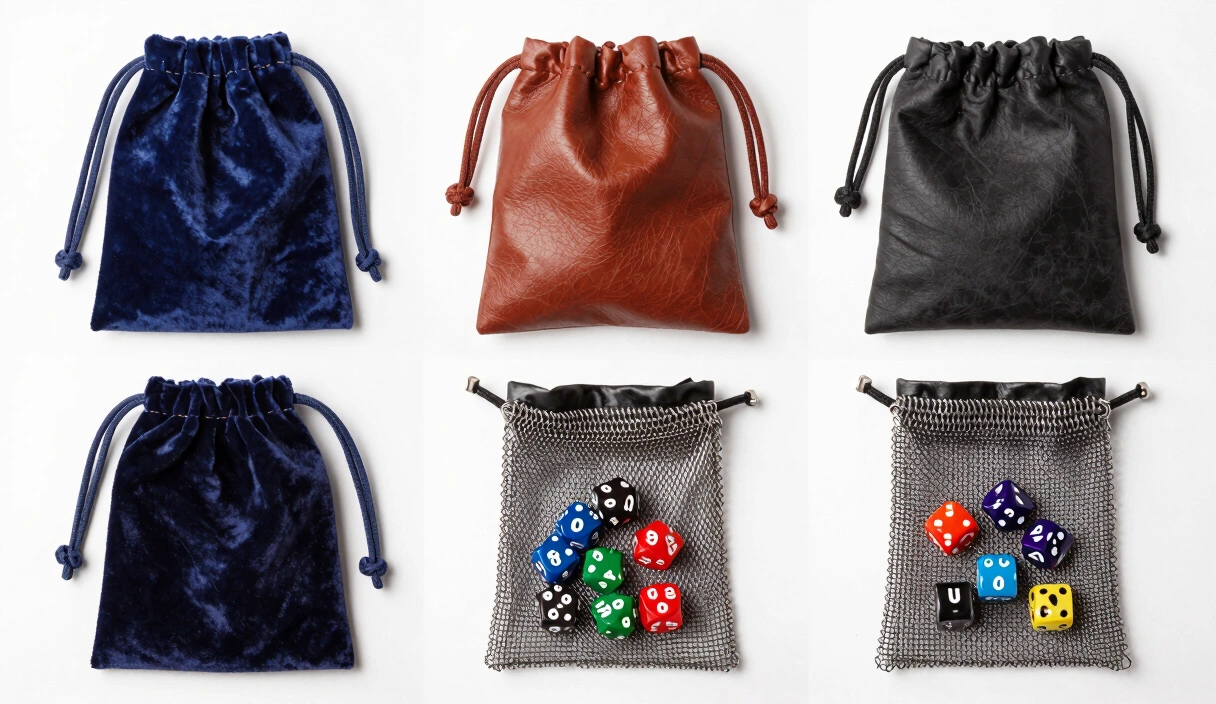
Best Dice Bags: From Crown Royal Pouches to Custom Leather
Comparing drawstring pouches, segmented bags, roll-ups, and hard cases for dice storage. Real picks with prices, plus a 30-minute DIY dice bag tutorial.